For many women, period cramps are more than just a monthly inconvenience. They can affect sleep, concentration, mood, and everyday activities. Whether you are working, attending classes, managing household responsibilities, or simply trying to get through the day comfortably, menstrual cramps can make even simple tasks feel challenging.
Every menstrual cycle is different. Some women experience mild discomfort, while others deal with intense cramps, lower back pain, bloating, and fatigue. The severity of symptoms can vary from month to month, making it difficult to predict how your body will feel during your period.
Because of this, many women look for natural ways to ease menstrual discomfort before turning to medication. Gentle yoga has become a popular option because it combines movement, stretching, breathing, and relaxation. These elements may help reduce tension in the body and promote a greater sense of comfort during menstruation.
Unlike intense workouts, yoga encourages you to move at your own pace and listen to your body’s needs. Certain yoga poses focus on relaxing the pelvic region, improving circulation, and reducing stress, which may help make period days feel more manageable.
Quick Benefits of Yoga for Period Cramps
Here is a quick overview before we go deeper:
- Helps relax pelvic and abdominal muscles that may tighten during menstruation
- Supports healthy blood circulation, which may help ease discomfort
- Can reduce stress and tension that often make cramps feel worse
- May help relieve lower back pain and pelvic pressure
- Encourages deep breathing and relaxation during periods
- Supports emotional well-being by promoting calmness and mindfulness
- Helps improve overall comfort during menstruation through gentle movement
Understanding Period Cramps and Other Common PMS Symptoms
Period cramps, also known as menstrual cramps, occur when the uterus contracts to shed its lining during menstruation. These contractions are triggered by hormone-like substances called prostaglandins. Higher levels of prostaglandins are often associated with stronger uterine contractions and more intense menstrual pain.
While mild cramping is common, some women experience moderate to severe discomfort that can interfere with their daily routine. Factors such as hormonal fluctuations, stress levels, lifestyle habits, and underlying health conditions can influence the intensity of menstrual pain.
Period cramps are often discussed as the primary symptom of menstruation, but they are rarely the only symptom women experience. Many women also notice physical and emotional changes before and during their periods.
Common symptoms that may accompany period cramps include:
- Lower back pain
- Bloating and abdominal heaviness
- Pelvic pressure
- Fatigue and low energy levels
- Mood changes and irritability
- Headaches
- Breast tenderness
- Difficulty concentrating
If you are looking for additional natural remedies for period cramps, there are several lifestyle practices that may complement yoga and help improve overall menstrual comfort.
How Yoga May Help Relieve Period Cramps Naturally
Can Yoga Help Relieve Period Cramps?
Yes. Gentle yoga may help reduce period cramps by improving blood circulation, relaxing pelvic muscles, reducing stress, and supporting overall comfort during menstruation. When combined with deep breathing and healthy self-care habits, yoga can become a simple and natural way to manage menstrual discomfort.
Yoga is often associated with flexibility and fitness, but its benefits extend far beyond stretching. Gentle yoga combines controlled movement, mindful breathing, and relaxation techniques that may support both physical and emotional well-being during menstruation.
Several studies have explored the connection between yoga and menstrual health. A narrative review published by the National Library of Medicine found that yoga interventions were associated with improvements in menstrual pain, stress levels, and overall quality of life among women experiencing dysmenorrhea. Researchers noted that yoga practices involving physical postures, breathing exercises, and relaxation techniques may help reduce pain intensity and support menstrual comfort. This suggests that regular yoga practice may serve as a supportive tool for managing menstrual discomfort alongside healthy lifestyle habits.
Improves Blood Flow to the Pelvic Area
Certain yoga poses encourage gentle movement and stretching around the hips, lower back, and pelvic region. Improved circulation may help reduce feelings of tightness and discomfort that often accompany menstrual cramps.
Better blood flow can also support muscle relaxation and contribute to a greater sense of ease during periods.
Helps Relax Tight Muscles
Menstrual cramps often cause tension in the lower abdomen, pelvis, and lower back. Gentle stretching may help release some of this tightness and reduce feelings of stiffness.
Poses that focus on opening the hips and lengthening the spine can be especially comforting when cramps are accompanied by lower back pain or pelvic pressure.
Supports Stress Relief
Stress does not directly cause period cramps, but it can make discomfort feel more intense. When the body is under stress, muscles tend to tighten, and pain may feel more noticeable.
Yoga encourages relaxation through slow, controlled movement and mindful awareness. This combination may help calm the body’s stress response and create a greater sense of physical comfort.
Encourages Deep Breathing
Breathing is a key part of yoga practice. Slow, deep breathing helps increase oxygen flow throughout the body and encourages relaxation.
Many women find that focusing on their breath during gentle stretches helps them feel calmer and more comfortable, especially during the most uncomfortable days of their cycle.
Promotes Relaxation During Periods
One of the most valuable benefits of yoga is its ability to encourage rest and relaxation. Instead of pushing your body through intense physical activity, yoga allows you to slow down and focus on gentle movement.
This mindful approach can help support overall well-being, making it easier to manage both the physical and emotional challenges that sometimes accompany menstruation.
For women who already follow cycle syncing workouts throughout their menstrual cycle, adding gentle yoga during period days can be an effective way to support comfort while respecting the body’s changing energy levels.
Why Gentle and Restorative Yoga Works Best During Periods
When period cramps strike, your first instinct may not be to exercise. In fact, many women feel more tired, bloated, or physically uncomfortable during menstruation. This is why gentle and restorative yoga is often a better choice than high-intensity workouts during this phase of the menstrual cycle.
Restorative yoga focuses on slow movements, supported stretches, controlled breathing, and relaxation. Instead of pushing the body to perform, it encourages comfort and recovery. This approach can be especially beneficial during periods when energy levels may naturally be lower.
Low-impact yoga poses allow the muscles around the abdomen, pelvis, hips, and lower back to relax without placing additional stress on the body. Many women find that gentle stretching helps ease feelings of tightness and stiffness that commonly accompany menstrual cramps.
Another advantage of restorative yoga is that it encourages mindfulness. By paying attention to your breath and moving slowly, you become more aware of how your body feels. This can help you identify which movements provide relief and which activities may feel too strenuous during your period.
Most importantly, gentle yoga respects the body’s changing energy levels. Some days you may feel comfortable completing a short yoga routine, while on other days you may simply want to focus on breathing exercises and relaxation. Both approaches are completely valid.
The goal is not perfection. The goal is to support your body with movement that feels comfortable and sustainable.
Common Myths About Yoga During Periods
There are many misconceptions about exercising during menstruation. These myths often discourage women from exploring activities that may actually help them feel better.
Let’s separate fact from fiction.
Myth 1: You Should Avoid All Physical Activity During Your Period
Many people believe that complete rest is the only option during menstruation. While rest is important, gentle movement can also be beneficial.
Activities such as yoga, stretching, and walking may help improve circulation, reduce muscle tension, and support relaxation. The key is choosing movement that feels comfortable rather than forcing intense exercise.
Myth 2: Yoga Can Make Period Pain Worse
Yoga is often designed to promote relaxation and flexibility. Certain poses specifically target areas where women commonly experience menstrual discomfort, including the lower back, hips, pelvis, and abdomen.
If a pose causes discomfort, it can be modified or skipped. Gentle yoga should never increase pain when practiced mindfully.
Myth 3: Only Experienced Yogis Can Practice Yoga During Menstruation
Many yoga poses recommended for period cramps are beginner-friendly and require no previous experience.
Simple poses such as Child’s Pose, Cat-Cow Stretch, and Legs-Up-the-Wall can be practiced by most beginners with minimal instruction.
Myth 4: You Must Follow a Strict Yoga Routine to See Benefits
Consistency can be helpful, but you do not need a perfect routine to experience benefits.
Even spending 10 to 15 minutes focusing on gentle stretches and breathing exercises may help support relaxation and comfort during your period.
Best Yoga Poses for Period Cramp Relief
Certain yoga poses focus on areas of the body that commonly hold tension during menstruation, including the lower back, hips, pelvis, and abdomen. These beginner-friendly poses encourage relaxation and may help ease discomfort naturally.
Remember to move slowly, breathe comfortably, and stop any movement that causes pain.
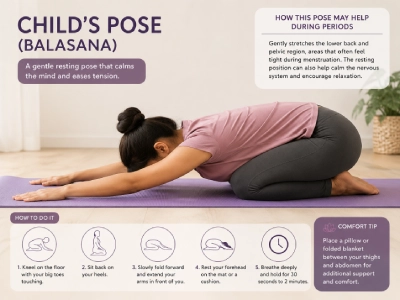
Child’s Pose (Balasana)
What It Is?
Child’s Pose is a resting yoga posture that gently stretches the lower back, hips, and thighs while promoting relaxation throughout the body
How to Do It?
- Kneel on the floor with your big toes touching.
- Sit back on your heels.
- Slowly fold forward and extend your arms in front of you.
- Rest your forehead on the mat or a cushion.
- Breathe deeply and hold for 30 seconds to 2 minutes.
How This Pose May Help During Periods?
Child’s Pose gently stretches the lower back and pelvic region, areas that often feel tight during menstruation. The resting position can also help calm the nervous system and encourage relaxation.
If there is one pose worth trying on a difficult period day, this is it. Hold it for as long as your body needs.
Comfort Tip
Place a pillow or folded blanket between your thighs and abdomen for additional support and comfort.
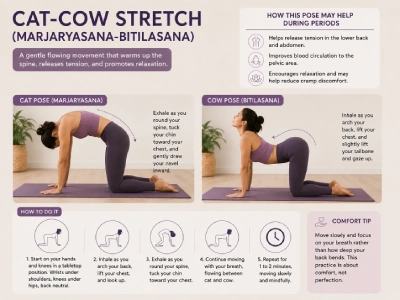
Cat-Cow Stretch (Marjaryasana-Bitilasana)
What It Is?
Cat-Cow Stretch is a gentle flowing movement that alternates between arching and rounding the spine.
How to Do It?
- Begin on your hands and knees.
- Inhale as you arch your back and lift your head and tailbone.
- Exhale as you round your spine and tuck your chin toward your chest.
- Continue moving slowly with your breath for 1 to 2 minutes.
How This Pose May Help During Periods?
The gentle movement helps release tension in the lower back and abdomen while promoting circulation throughout the pelvic area.
Even two minutes of this gentle flow can shift how your body feels. It works just as well on your bedroom floor as it does on a yoga mat.
Comfort Tip
Move slowly and focus on your breathing rather than trying to stretch deeply.
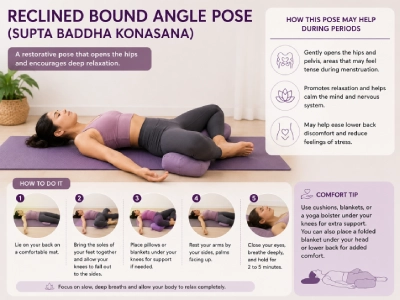
Reclined Bound Angle Pose (Supta Baddha Konasana)
What It Is?
This restorative pose opens the hips and encourages deep relaxation.
How to Do It?
- Lie on your back.
- Bring the soles of your feet together.
- Allow your knees to fall outward comfortably.
- Rest your hands on your abdomen or by your sides.
- Hold for 2 to 5 minutes while breathing slowly.
How This Pose May Help During Periods?
This pose may help release tension around the hips and pelvis while promoting relaxation and stress relief.
Comfort Tip
Place cushions or folded blankets under your knees for extra support.
Supine Twist (Supta Matsyendrasana)
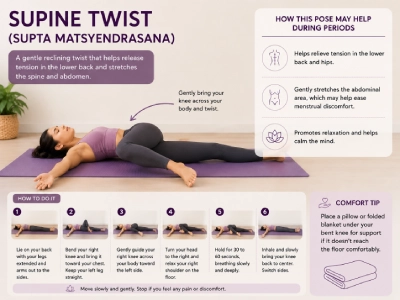
What It Is?
A gentle reclining twist that helps stretch the lower back and torso.
How to Do It?
- Lie on your back.
- Bring one knee toward your chest.
- Gently guide it across your body toward the opposite side.
- Extend your arms outward.
- Hold for 30 to 60 seconds before switching sides.
How This Pose May Help During Periods?
Twisting movements can help release tension in the lower back and provide a gentle stretch through the abdominal region.
Comfort Tip
Place a cushion beneath the bent knee if it does not comfortably reach the floor.
Happy Baby Pose
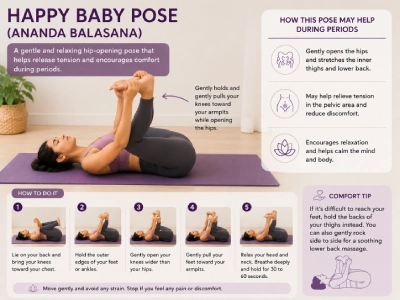
What It Is?
Happy Baby Pose is a gentle hip-opening stretch that encourages relaxation.
How to Do It?
- Lie on your back.
- Bend your knees toward your chest.
- Hold the outer edges of your feet or ankles.
- Gently pull your knees toward your armpits.
- Hold for 30 to 60 seconds.
How This Pose May Help During Periods?
The pose gently stretches the hips and lower back while helping release pelvic tension.
Comfort Tip
If holding your feet feels uncomfortable, hold the backs of your thighs instead.
Bridge Pose (Setu Bandhasana)
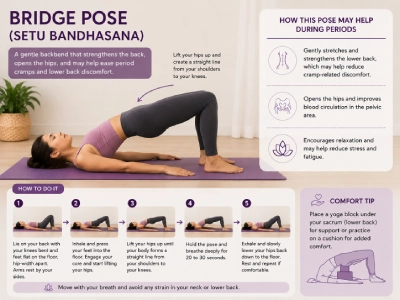
What It Is?
Bridge Pose is a gentle backbend that lifts the hips while strengthening and stretching the body.
How to Do It?
- Lie on your back with your knees bent.
- Place your feet hip-width apart.
- Press your feet into the floor and slowly lift your hips.
- Hold for a few breaths.
- Slowly lower your hips back down.
How This Pose May Help During Periods?
Bridge Pose may help reduce stiffness in the lower back while encouraging circulation throughout the pelvic region.
Comfort Tip
Place a yoga block or cushion under your hips for a supported version of the pose.
Cobra Pose (Bhujangasana)
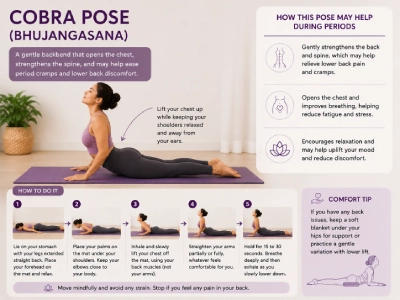
What It Is?
Cobra Pose is a gentle backbend that stretches the front of the body.
How to Do It?
- Lie face down.
- Place your hands beneath your shoulders.
- Slowly lift your chest while keeping your elbows slightly bent.
- Hold for a few breaths before lowering.
How This Pose May Help During Periods?
This pose may help stretch the abdominal muscles and relieve lower back tension that sometimes accompanies menstrual cramps.
Comfort Tip
Avoid lifting too high. A gentle, low lift is enough to experience the benefits and also keeps this distinct from deeper backbends, which may feel uncomfortable during periods.
Legs-Up-the-Wall Pose (Viparita Karani)
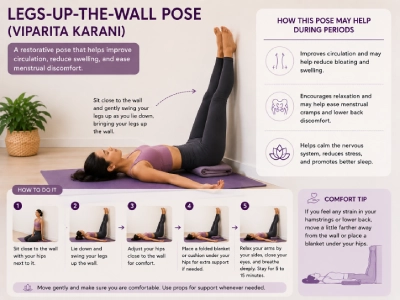
What It Is?
A restorative pose that allows the legs to rest against a wall while the body relaxes.
How to Do It?
- Sit beside a wall.
- Gently lie on your back and swing your legs upward.
- Rest your arms by your sides.
- Stay in the pose for 3 to 10 minutes.
How This Pose May Help During Periods?
This pose encourages relaxation, reduces tension in the lower body, and may help relieve feelings of fatigue.
This one asks very little of you – just a wall and a few quiet minutes. Many women find it becomes their go-to pose when exhaustion and cramps arrive together.
Comfort Tip
Place a folded blanket beneath your hips for added comfort.
Corpse Pose (Savasana)
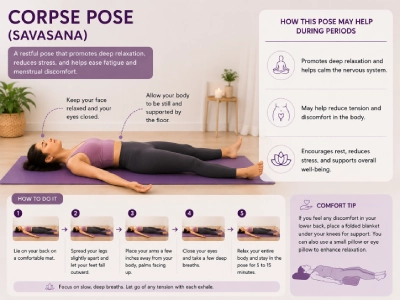
What It Is?
Savasana is a relaxation pose often practiced at the end of a yoga session.
How to Do It?
- Lie comfortably on your back.
- Allow your arms and legs to relax.
- Close your eyes.
- Focus on slow, natural breathing for several minutes.
How This Pose May Help During Periods?
This pose encourages complete physical and mental relaxation, which may help reduce stress and support overall comfort during menstruation.
Comfort Tip
Place a pillow beneath your knees to reduce pressure on your lower back.
A Simple 10 to 15 Minutes Yoga Routine for Period Cramp Relief
You do not need a long yoga session to experience the benefits of gentle movement during your period. A simple 10 to 15-minute routine can help relax tight muscles, improve circulation, and encourage relaxation without putting additional stress on the body.
If you are new to yoga or feeling low on energy, this beginner-friendly routine is a great place to start.
| Pose | Duration |
|---|---|
| Cat-Cow Stretch | 2 Minutes |
| Child’s Pose | 2 Minutes |
| Supine Twist | 2 Minutes per side |
| Happy Baby Pose | 1 Minute |
| Legs-Up-the-Wall | 3 Minutes |
| Corpse Pose (Savasana) | 2 Minutes |
This short routine focuses on the areas most commonly affected during menstruation, including the lower back, hips, pelvis, and abdomen.
Remember that the goal is comfort, not perfection. Move slowly, breathe deeply, and modify any pose as needed. Even a few minutes of gentle stretching can help you feel more relaxed and supported during your period.
Breathing Exercises That May Support Period Comfort
Breathing plays a central role in yoga and relaxation practices. When you experience period pain, stress and tension can sometimes make discomfort feel more intense. Focusing on your breath may help calm the nervous system and encourage the body to relax.
These simple breathing techniques can be practiced alongside yoga poses or on their own whenever you need a moment of relief.
Deep Belly Breathing
Deep Belly Breathing, also known as diaphragmatic breathing, encourages slow and controlled breaths that engage the diaphragm.
How to Practice:
- Sit or lie down comfortably.
- Place one hand on your chest and the other on your abdomen.
- Inhale slowly through your nose and allow your abdomen to rise.
- Exhale gently through your mouth.
- Repeat for 2 to 5 minutes.
Benefits During Periods:
- Promotes relaxation
- Helps reduce stress
- Encourages mindful awareness
- May help ease muscle tension
Slow Inhale-Exhale Breathing
This technique focuses on creating a steady breathing rhythm.
How to Practice:
- Inhale slowly through your nose for a count of four.
- Exhale slowly through your mouth for a count of six.
- Continue for several minutes.
Benefits During Periods:
- Encourages calmness
- Supports relaxation
- Helps shift focus away from discomfort
- Can be practiced anywhere
Relaxation Breathing Before Sleep
Many women find that cramps feel more noticeable at night. Relaxation breathing before bed may help calm the body and prepare it for restful sleep.
How to Practice:
- Lie comfortably on your back.
- Close your eyes.
- Take slow, gentle breaths.
- Focus only on the movement of your breath.
- Continue for 5 minutes before sleeping.
Benefits During Periods:
- Supports relaxation before bedtime
- Encourages better sleep quality
- Helps release physical tension accumulated throughout the day
How Yoga Supports Emotional Well-Being During Periods
Periods can affect more than physical comfort. Hormonal changes throughout the menstrual cycle may influence mood, energy levels, stress levels, and emotional well-being.
Many women experience feelings of irritability, frustration, anxiety, or emotional sensitivity during their periods. While these experiences are normal, they can sometimes make menstrual discomfort feel even more challenging.
Yoga offers benefits that go beyond stretching and flexibility. The combination of mindful movement, breathing, and relaxation encourages a stronger connection between the mind and body.
Supports Stress Management
Stress can increase muscle tension and make pain feel more intense. Gentle yoga encourages relaxation, helping the body move away from a heightened stress response.
Encourages Mindfulness
Mindfulness involves paying attention to the present moment without judgment. During yoga practice, this often means focusing on your breathing, posture, and body awareness.
This simple shift in focus may help reduce feelings of overwhelm and encourage a greater sense of calm.
Promotes Emotional Balance
Yoga creates an opportunity to slow down and check in with your body’s needs. Many women find that regular yoga practice helps them feel more balanced and emotionally grounded throughout their menstrual cycle.
Builds a Positive Connection With Your Body
Periods can sometimes feel frustrating, especially when symptoms interfere with daily life. Yoga encourages self-compassion and body awareness, helping you approach your menstrual cycle with greater understanding rather than frustration.
Tips for Practicing Yoga During Your Period
Yoga during menstruation should feel supportive, not exhausting. The following tips can help you create a more comfortable and enjoyable practice.
Wear Comfortable Clothing
Loose and breathable clothing allows you to move freely without unnecessary pressure around the abdomen or hips.
Comfortable clothing can make a significant difference during yoga sessions, especially on days when bloating is more noticeable.
Practice on a Light Stomach
Many women find that yoga feels more comfortable when practiced a couple of hours after a meal.
A light stomach can make twists, stretches, and forward folds feel easier and more comfortable.
Move Slowly
There is no need to rush through yoga poses during your period.
Focus on gentle movements, controlled breathing, and listening to your body’s signals.
Use Cushions or Blankets if Needed
Yoga props can provide extra support and make poses more accessible.
Pillows, folded blankets, and cushions can help reduce strain and improve comfort during restorative poses.
Focus on Comfort, Not Performance
Your yoga practice during menstruation does not need to look perfect. The purpose is to support relaxation and well-being rather than achieve advanced poses.
Give yourself permission to modify movements, shorten your practice, or simply rest when needed.
Listen to Your Body
Every menstrual cycle is different. Some months you may feel energetic enough for a longer practice, while other months you may prefer a few gentle stretches and breathing exercises.
Pay attention to how your body feels and adjust accordingly.
Remember:
- Modify poses when necessary.
- Take breaks whenever needed.
- Stop any movement that causes pain.
- Rest if your body asks for it.
The most effective yoga practice is the one that supports your comfort and respects your body’s needs.
Yoga Poses and Practices to Avoid During Your Period
While yoga can be a helpful way to support comfort during menstruation, not every pose feels right for every person. During your period, it is often best to prioritize gentle, restorative movements and avoid pushing your body beyond its comfort level.
There is no universal rule about which yoga poses should or should not be practiced during menstruation. Individual preferences, energy levels, and symptoms vary from person to person. The most important guideline is to listen to your body and choose movements that feel supportive rather than exhausting.
Intense Core Exercises
Yoga poses that heavily engage the abdominal muscles may feel uncomfortable when cramps are already causing tension in the lower abdomen.
If a pose increases pressure or discomfort, consider replacing it with a gentler alternative such as Child’s Pose or Reclined Bound Angle Pose.
Advanced Inversions
Some yoga traditions recommend avoiding inversions during menstruation, while others believe they are safe when practiced comfortably.
Examples include:
- Headstands
- Handstands
- Shoulder Stands
If you are experienced with inversions and they feel comfortable, you may choose to continue practicing them. However, if you feel discomfort, dizziness, or increased fatigue, it may be better to focus on restorative poses.
Hot Yoga
Hot yoga sessions can be physically demanding and may contribute to dehydration if fluid intake is not maintained.
Since many women already experience fatigue during menstruation, gentler forms of yoga are often a more comfortable option.
Deep Backbends During Heavy Discomfort
Intense backbends can place additional strain on the abdomen and lower back. If cramps are severe, restorative stretches may feel more supportive than deep backbending poses.
Choose Comfort Over Rules
The best yoga practice during menstruation is one that respects your body’s needs. Some women feel energized and comfortable moving through a longer practice, while others prefer breathing exercises and restorative stretches.
There is no right or wrong approach. Focus on what helps you feel comfortable and supported.
Why Comfortable Period Care Matters During Yoga and Daily Activities
Yoga can help promote relaxation and support comfort during menstruation, but movement is only one part of the equation. The way you care for yourself throughout your period also plays an important role in your overall experience.
Whether you are practicing yoga, working, studying, commuting, or relaxing at home, comfort matters.
During menstruation, many women experience:
- Increased sensitivity around the skin
- Sweating due to physical activity
- Friction caused by movement
- Irritation from prolonged pad usage
- General discomfort during long days
These factors can affect how comfortable you feel throughout the day and may even make it harder to relax during yoga practice.
Comfort During Movement
Yoga involves stretching, bending, and changing positions. During these movements, uncomfortable menstrual products can sometimes create distractions that make it difficult to focus on relaxation.
Choosing products that allow freedom of movement can help you stay focused on your practice rather than your discomfort.
Breathability Matters
Breathable materials help improve airflow and may contribute to a fresher feeling throughout the day.
This can be especially important during warmer weather, physical activity, or extended wear.
For a deeper understanding of how comfort impacts the period experience, read our guide on why softness matters in sanitary pads.
Reducing Irritation and Friction
When the skin remains exposed to moisture and friction for extended periods, irritation can occur.
Using comfortable and skin-friendly menstrual products may help reduce discomfort and support confidence throughout the day.
Confidence During Stretching and Relaxation
Feeling secure and comfortable in your menstrual product allows you to move more freely and focus on your well-being.
Whether you are practicing yoga or simply managing daily responsibilities, confidence can make a significant difference in your overall period experience.
If you are exploring different options, our comparison of ultra-thin vs regular sanitary pads can help you understand which type may better suit your needs.
Creating a Comfortable Period Care Routine
Managing period discomfort often involves more than a single solution. Many women find that combining multiple healthy habits helps create a more comfortable and balanced menstrual experience.
A well-rounded period care routine can support both physical and emotional well-being.
Stay Hydrated
Drinking enough water supports overall health and may help reduce feelings of fatigue.
Hydration becomes especially important when practicing yoga or spending long hours on your feet.
Use Warm Compresses
Many women find that applying a heating pad or warm compress to the lower abdomen provides temporary comfort during cramps.
Combining heat therapy with gentle stretching can create a soothing self-care experience.
Eat Balanced and Nourishing Meals
Nutritious foods can help support energy levels and overall health throughout your cycle.
Focus on a balanced diet that includes fruits, vegetables, whole grains, and protein-rich foods.
Choose Comfortable Menstrual Products
The menstrual products you use can influence your overall comfort throughout the day.
Soft, breathable, and well-designed sanitary pads can help you feel more comfortable while working, exercising, resting, or practicing yoga.
Using safe hygiene products is also important for supporting skin comfort and reducing irritation. Learn more about how safe hygiene products help prevent infections and rashes.
You may also find it helpful to understand whether menstrual products can contribute to irritation or discomfort by reading our guide on can sanitary pads cause UTIs.
NIRAA’s Role in Supporting Period Comfort
At NIRAA By SDG, we believe period care should support comfort, confidence, and well-being throughout every stage of the menstrual cycle.
While yoga and self-care practices can play an important role in managing menstrual discomfort, comfortable menstrual products can help complete the experience.
Designed for Everyday Comfort
Periods do not stop daily life. Whether you are attending classes, working, traveling, exercising, or practicing yoga, comfort remains essential.
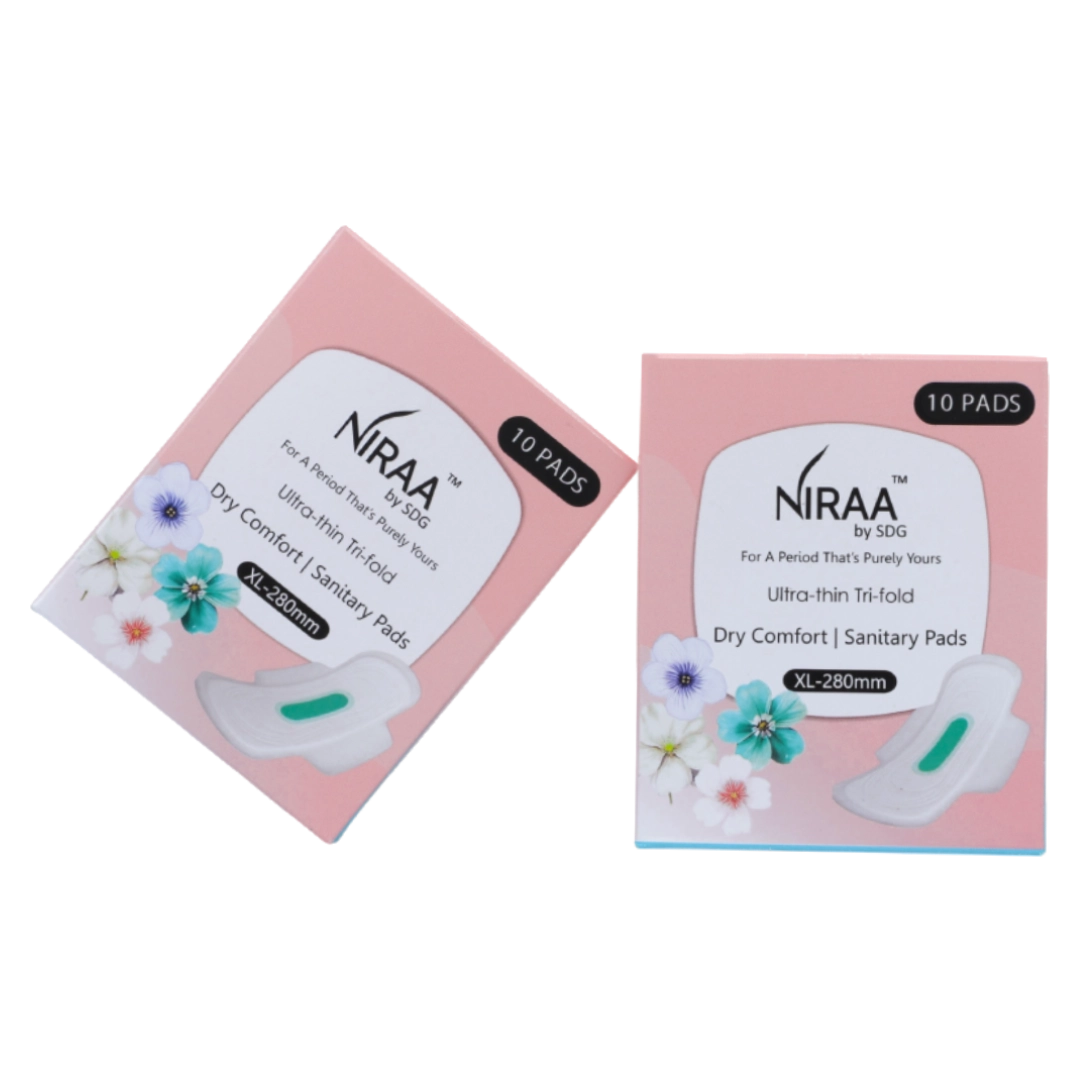
NIRAA sanitary pads are designed to support everyday movement while helping women feel comfortable and protected throughout the day.
Softness That Supports Comfort
The softness of a sanitary pad can influence how comfortable it feels during extended wear.
Soft materials may help reduce friction and create a gentler experience, especially during days when the skin feels more sensitive.
Breathability for a Fresher Feel
Breathable menstrual products can contribute to improved comfort by supporting airflow and helping reduce feelings of stuffiness during long hours of use.
Confidence During Movement
Whether you are stretching into Child’s Pose or simply moving through your daily routine, feeling secure and comfortable can help you focus on what matters most.
Comfortable period care is not only about protection. It is also about supporting confidence, freedom of movement, and peace of mind throughout the day.
Explore NIRAA’s range of comfortable sanitary pads designed to support everyday period care and menstrual comfort.
When Should You See a Doctor for Period Pain?
Mild to moderate period cramps are common and can often be managed with self-care practices such as rest, gentle movement, heat therapy, and healthy lifestyle habits. However, menstrual pain should not be ignored if it becomes severe or starts interfering with your quality of life.
In some cases, intense menstrual pain may be linked to an underlying health condition that requires medical evaluation and treatment.
Consider speaking with a healthcare professional if you experience:
Severe Cramps That Disrupt Daily Activities
If period pain regularly prevents you from attending work, school, or carrying out everyday responsibilities, it may be time to seek medical advice.
Heavy Menstrual Bleeding
Heavy bleeding that requires frequent pad changes or significantly affects daily life should be discussed with a doctor.
Dizziness or Fainting
Feeling lightheaded, dizzy, or faint during your period may indicate excessive blood loss or another underlying issue that requires medical attention.
Pain That Gets Worse Over Time
While menstrual symptoms can vary from cycle to cycle, pain that becomes progressively more severe should not be ignored.
Symptoms That Do Not Improve With Self-Care
If yoga, heat therapy, hydration, rest, and other comfort measures provide little to no relief, a healthcare provider can help identify possible causes.
Possible Underlying Conditions
Severe menstrual pain may sometimes be associated with conditions such as:
Endometriosis
A condition where tissue similar to the uterine lining grows outside the uterus, often causing significant pain and discomfort.
Polycystic Ovary Syndrome (PCOS)
A hormonal condition that may affect menstrual cycles and contribute to period-related symptoms.
Uterine Fibroids
Non-cancerous growths in the uterus that can sometimes lead to heavy bleeding and painful periods.
Remember
Painful periods should not be dismissed as something you simply have to tolerate. If menstrual discomfort is affecting your physical health, emotional well-being, or quality of life, seeking professional guidance is an important step toward finding the right support.
Final Thoughts
Period cramps can make everyday activities feel more challenging, but small self-care practices can often make a meaningful difference. Gentle yoga offers a natural and accessible way to support relaxation, release muscle tension, and encourage greater comfort during menstruation.
The beauty of yoga is that it can be adapted to your individual needs. Whether you prefer a short stretching routine, restorative poses, breathing exercises, or a combination of all three, the goal is to create a practice that feels supportive and sustainable for your body.
Alongside yoga, simple habits such as staying hydrated, getting enough rest, managing stress, and choosing comfortable menstrual products can contribute to a more positive period experience.
Remember that every body is different. Some poses may feel incredibly soothing for one person, while others may prefer different approaches to managing discomfort. Listening to your body and respecting its needs is one of the most valuable forms of self-care.
By combining gentle movement, mindful breathing, healthy lifestyle habits, and comfortable period care, you can create a routine that supports your well-being throughout your menstrual cycle.
Support Your Period Comfort with NIRAA
Explore NIRAA By SDG’s range of comfortable sanitary pads designed to support softness, breathability, and confidence throughout your period, so you can focus on feeling your best every day of the month.
FAQs
Can yoga help reduce period cramps naturally?
Yes. Gentle yoga may help support menstrual comfort by promoting relaxation, improving circulation, reducing muscle tension, and encouraging mindful breathing. While results vary from person to person, many women find that regular yoga practice helps make period cramps more manageable.
Which yoga pose is best for menstrual pain?
There is no single best pose for everyone, but Child’s Pose, Reclined Bound Angle Pose, Supine Twist, and Legs-Up-the-Wall Pose are commonly recommended because they encourage relaxation and gently stretch areas where menstrual tension often occurs.
Is yoga safe during periods?
For most women, gentle yoga is considered safe during menstruation. The key is to focus on comfort, move slowly, and avoid any poses that increase discomfort. If you have a medical condition or severe pain, consult a healthcare professional before beginning a new exercise routine.
Can yoga help with bloating during periods?
Yoga may help ease feelings of bloating by encouraging gentle movement, improving circulation, and promoting relaxation. Poses that involve gentle twists and stretching can feel particularly comforting when bloating is present.
Can yoga help with PMS symptoms?
Yoga may support overall well-being during the menstrual cycle by helping manage stress, promoting relaxation, and encouraging mindfulness. Many women find that yoga helps them feel calmer and more balanced during PMS.
How long should I practice yoga during my period?
Even a short session of 10 to 15 minutes can be beneficial. The ideal duration depends on your comfort level, energy levels, and symptoms. Gentle, consistent practice is often more helpful than pushing through a long workout.
What is the best time to practice yoga during periods?
There is no universal best time. Some women prefer practicing yoga in the morning to ease stiffness, while others find evening sessions more relaxing. Choose a time that feels most comfortable for your body and schedule.
Should I do yoga on the first day of my period?
Yes, many women can safely practice gentle yoga on the first day of their period. Restorative poses and breathing exercises may feel especially supportive when cramps and fatigue are most noticeable.
Are there yoga poses to avoid during periods?
Some women prefer to avoid advanced inversions, intense core-focused exercises, hot yoga, or deep backbends when experiencing significant discomfort. However, comfort levels vary, and it is important to listen to your body rather than follow rigid rules.
Is yoga safe during heavy menstrual flow?
Yes, gentle and restorative yoga is generally comfortable during heavy flow days. On heavier days, prioritise poses that keep the body low to the ground such as Child’s Pose, Reclined Bound Angle Pose, and Legs-Up-the-Wall. Avoid poses that feel physically demanding, stay hydrated, and take breaks as needed.
Can beginners practice yoga during periods?
Absolutely. Many yoga poses recommended for menstrual comfort are beginner-friendly and can be modified based on individual flexibility and experience levels.
Can breathing exercises help reduce menstrual discomfort?
Breathing exercises may help promote relaxation and reduce stress, which can influence how pain is perceived. Many women find that combining breathing techniques with gentle yoga creates a more calming and comfortable experience during menstruation.
When should I see a doctor for period pain?
You should consult a healthcare professional if period pain becomes severe, disrupts daily life, worsens over time, is accompanied by heavy bleeding, or does not improve with self-care measures. Conditions such as endometriosis, PCOS, or fibroids may require medical evaluation.