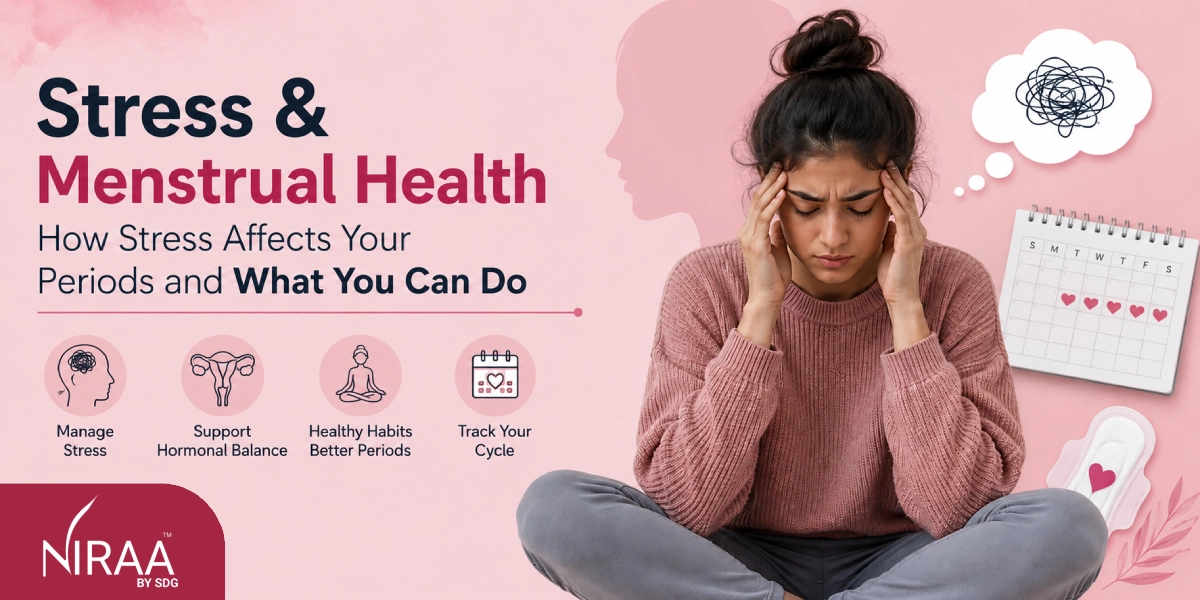
Work stress, poor sleep, emotional pressure, and daily responsibilities can affect more than just your mood. Many women notice delayed periods, heavier flow, stronger cramps, or unusual cycle changes during stressful phases of life. While these changes are often ignored, stress affects periods more than most people realize. From students and working professionals to mothers managing busy routines, stress-related menstrual changes have become increasingly common among Indian women.
Menstrual health is closely connected to hormonal balance, emotional well-being, and overall physical health. When stress levels rise, the body produces more cortisol, commonly known as the stress hormone. This hormonal shift can interfere with ovulation and affect the regularity, flow, and symptoms of your menstrual cycle.
Despite how common these experiences are, many women still hesitate to talk openly about menstrual health and stress. Along with managing stress, choosing comfortable and reliable menstrual hygiene products can also help women feel more confident and supported during unpredictable cycles.
What Is Menstrual Health and Why Does It Matter?
Menstrual health is more than just getting a period every month. It refers to the overall physical, emotional, and hormonal well-being connected to the menstrual cycle. A healthy menstrual cycle often reflects how well the body is functioning internally, including hormone balance, reproductive health, stress levels, sleep quality, and lifestyle habits.
For many women, periods are treated only as a hygiene concern. However, menstrual health is also closely linked to emotional wellness and overall health awareness. Changes in cycle timing, flow, cramps, mood swings, or missed periods can sometimes signal underlying hormonal imbalances, stress, or lifestyle-related issues that should not be ignored.
In today’s fast-paced lifestyle, many Indian women juggle work pressure, studies, family responsibilities, poor sleep, and emotional stress, all of which can influence menstrual wellness. This is why menstrual health awareness is becoming increasingly important, especially for adolescent girls, working professionals, and women dealing with hormonal health concerns like PCOS or irregular periods.
Understanding your menstrual cycle helps you recognize what feels normal for your body and identify changes early, which is the first step before looking at what stress specifically does to that cycle.
How Does Stress Affect Your Menstrual Cycle?
Stress does not only affect mental health, it can also influence the body’s hormonal balance and reproductive system. When stress becomes frequent or long-term, it may interfere with the hormones responsible for regulating the menstrual cycle. This is one of the main reasons why many women experience irregular periods due to stress, changes in flow, or worsening PMS symptoms during emotionally challenging phases.
The Role of Cortisol and Hormones
When the body experiences stress, it releases cortisol, commonly known as the stress hormone. Cortisol helps the body respond to pressure or difficult situations, but consistently high cortisol levels can affect the balance of important reproductive hormones like estrogen and progesterone.
When these hormones become imbalanced, ovulation may be delayed or disrupted, which can directly affect menstrual cycles. This hormonal disruption may lead to missed periods, delayed cycles, heavier bleeding, or changes in menstrual symptoms.
Simple hormonal flow:
Stress → Increased Cortisol → Hormonal Imbalance → Irregular/Missed/Heavy Periods
Chronic stress can also interfere with communication between the brain and reproductive hormones, especially the hypothalamus and pituitary glands that help regulate the menstrual cycle.
Common Ways Stress Affects Periods
Stress and hormonal imbalance can affect every woman differently. Some may notice minor cycle changes, while others experience more noticeable symptoms.
Common stress-related menstrual changes include:
- Delayed periods
- Missed periods
- Heavy menstrual bleeding
- Lighter-than-usual flow
- Painful cramps
- Longer or irregular cycles
- Severe PMS symptoms
- Increased mood swings and fatigue
In some cases, emotional stress may even make period pain feel more intense because stress can increase inflammation and sensitivity to discomfort. This is why managing stress is an important part of supporting both menstrual wellness and overall health.
What Indian Research Says About Stress and Periods
The connection between stress and menstrual health is becoming increasingly visible among Indian women, especially among students, young professionals, and women balancing demanding lifestyles. Rising academic pressure, work stress, irregular sleep patterns, and emotional burnout are all contributing to menstrual irregularities across different age groups.
Research Findings on Stress and Menstrual Irregularities
Several studies have highlighted the relationship between stress and menstrual cycle changes in young women. In fact, a PubMed Study on Stress and Menstrual Irregularities of young Indian women found that nearly 22% of women experiencing high stress reported irregular menstrual cycles.
Research has also linked stress with dysmenorrhea, commonly known as painful menstrual cramps. Women dealing with emotional stress often report increased discomfort, fatigue, mood changes, and worsening PMS symptoms during their periods. These findings show that stress is not just a mental health concern but also an important menstrual health issue that deserves more awareness and discussion.
Why Modern Indian Lifestyles Increase Stress
Modern lifestyles have significantly changed daily routines and health habits, especially for women living in urban environments. Long working hours, academic competition, digital overload, lack of sleep, and constant multitasking can increase physical and emotional stress levels.
Common lifestyle factors contributing to stress-related menstrual problems include:
- Academic stress among students
- Excessive screen time and digital fatigue
- Emotional stress and anxiety
- Urban lifestyle imbalance
- Hormonal conditions like PCOS combined with stress
Poor sleep and work pressure are two of the biggest contributors here, and we’ll look at those in more detail further down.
When stress becomes chronic, it can continuously affect hormone regulation and menstrual cycle health. This is why menstrual health awareness India is becoming increasingly important for women of all age groups.
Key Takeaway:
Stress is no longer just a mental health issue. It is increasingly becoming a menstrual health concern for women across India.
Signs Stress May Be Affecting Your Periods
Your body often gives warning signs when stress starts affecting hormonal balance and menstrual health. While occasional changes in your cycle can happen naturally, frequent irregularities during stressful periods may indicate that your hormones are being influenced by emotional or physical stress.
Recognizing these symptoms early can help you understand your body better and take steps to support your menstrual wellness before the problem becomes more severe.
Quick Self-Check: Is Stress Behind Your Period Changes?
Occasional changes in your cycle are normal and can happen for many reasons – travel, illness, or a particularly busy week. What’s worth paying attention to is a pattern that lines up with a stressful phase in your life.
Ask yourself:
- Did the change start around a stressful event, deadline, or emotional phase?
- Has it repeated for two or more cycles in a row?
- Are you also noticing other stress signs, such as poor sleep, fatigue, or anxiety, alongside the period changes?
If you’re answering yes to most of these, stress is likely playing a role. If the changes continue regardless of your stress levels, it’s worth ruling out other causes (see “When Should You Consult a Doctor?” below).
Heavy Menstrual Flow During Stress: Why Your Pad Choice Matters
Stress-related hormonal imbalance can sometimes affect the intensity and duration of menstrual flow. While some women may experience lighter periods, others may notice heavier bleeding during stressful phases. Heavy menstrual flow can feel physically exhausting and emotionally overwhelming, especially during work hours, travel, classes, or long daily routines.
Frequent leakage worries, discomfort, and the need for constant pad changes can also add to emotional stress during periods. For many women, managing heavy flow becomes not just a physical challenge but also a confidence-related concern.
Why Comfortable Protection Matters During Stressful Periods
During unpredictable or heavy-flow days, choosing the right menstrual hygiene products can make a noticeable difference in comfort and peace of mind. Soft, breathable, and high-absorbency sanitary pads can help women feel more secure throughout the day while reducing irritation and discomfort caused by prolonged wear.
Important features women often look for during heavy-flow periods include:
- High absorbency support
- Soft surface comfort
- Breathability during long wear hours
- Reliable protection against leakage
- Comfortable fit for daily movement
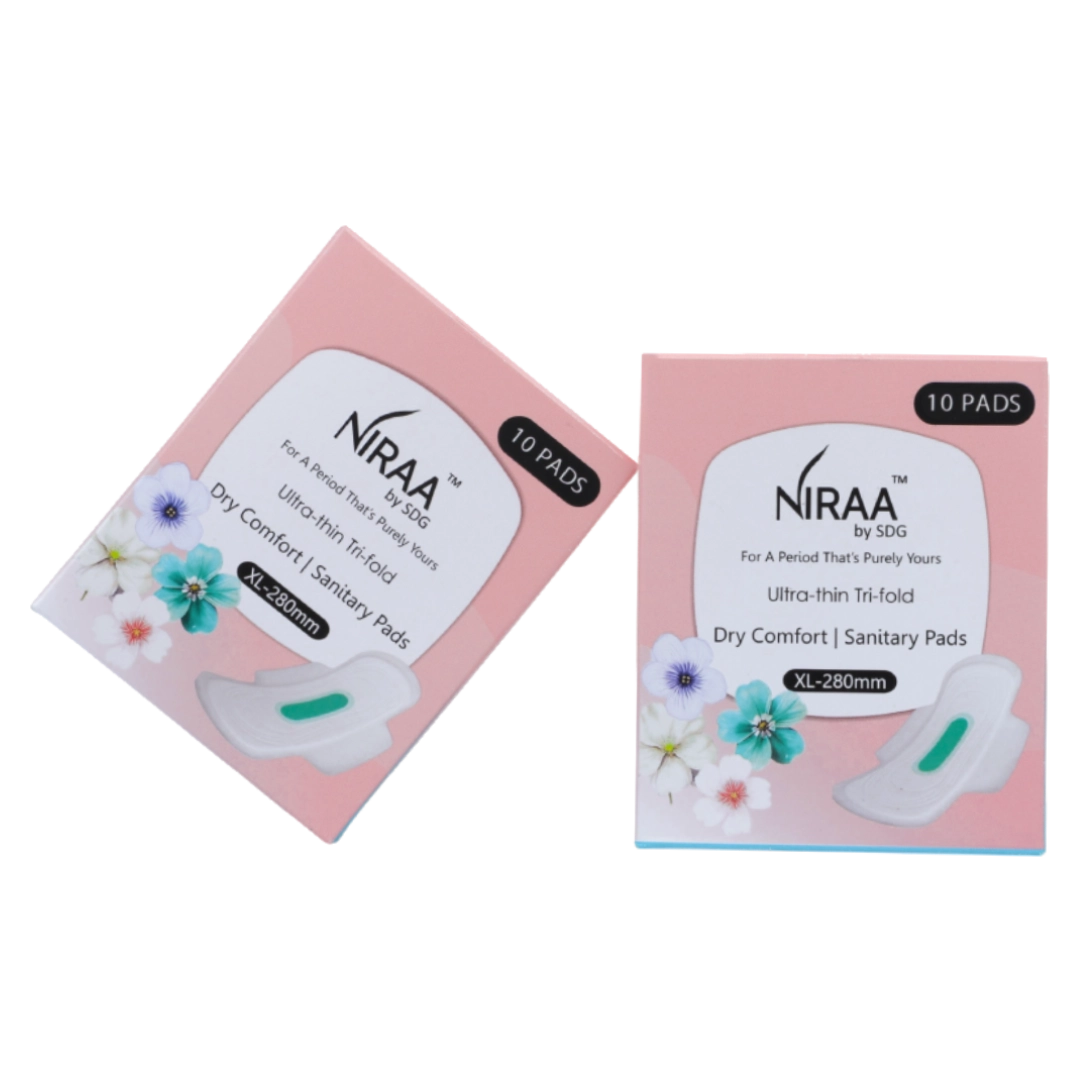
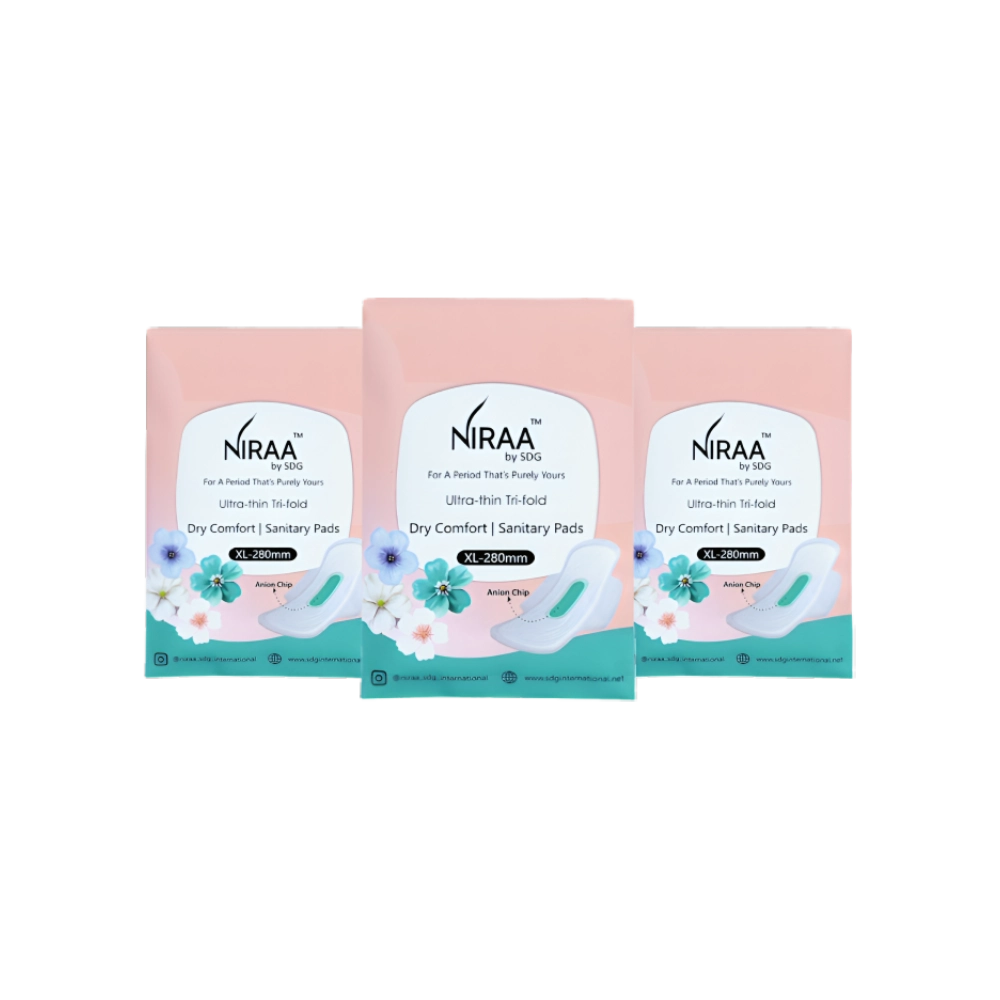
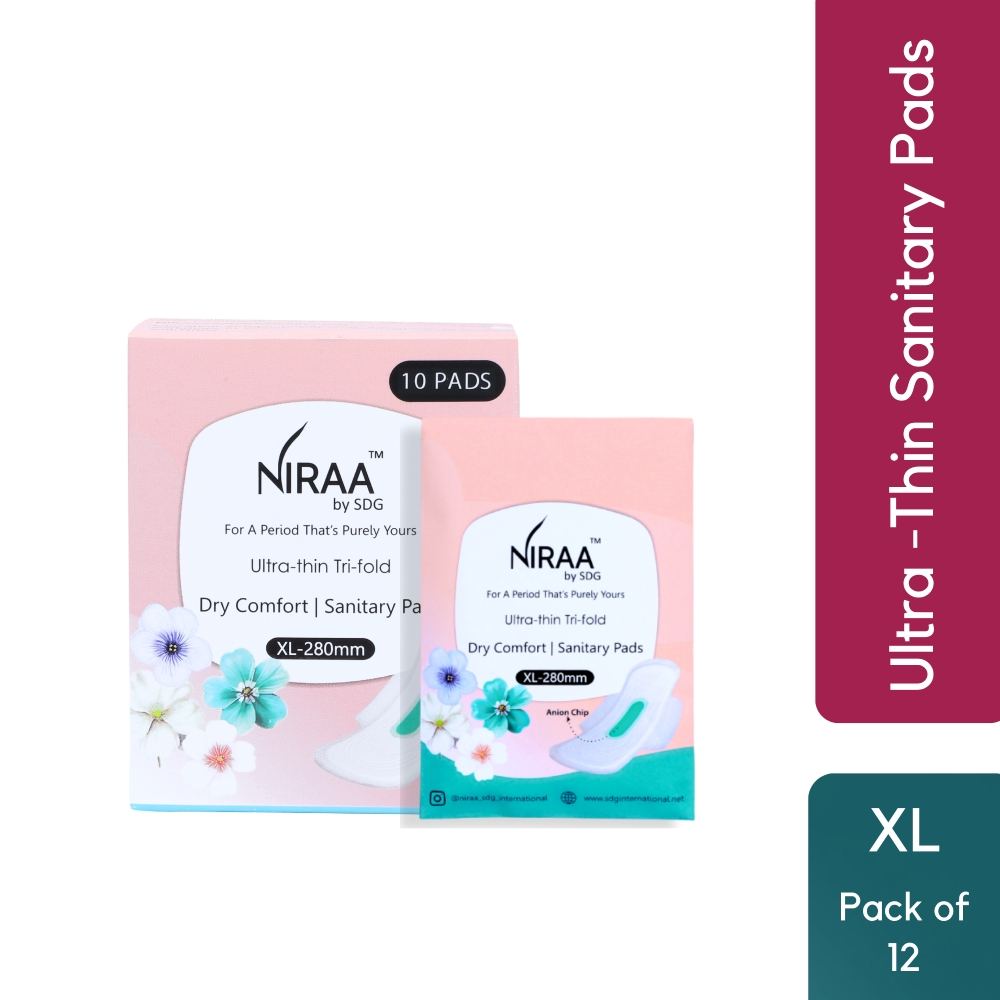
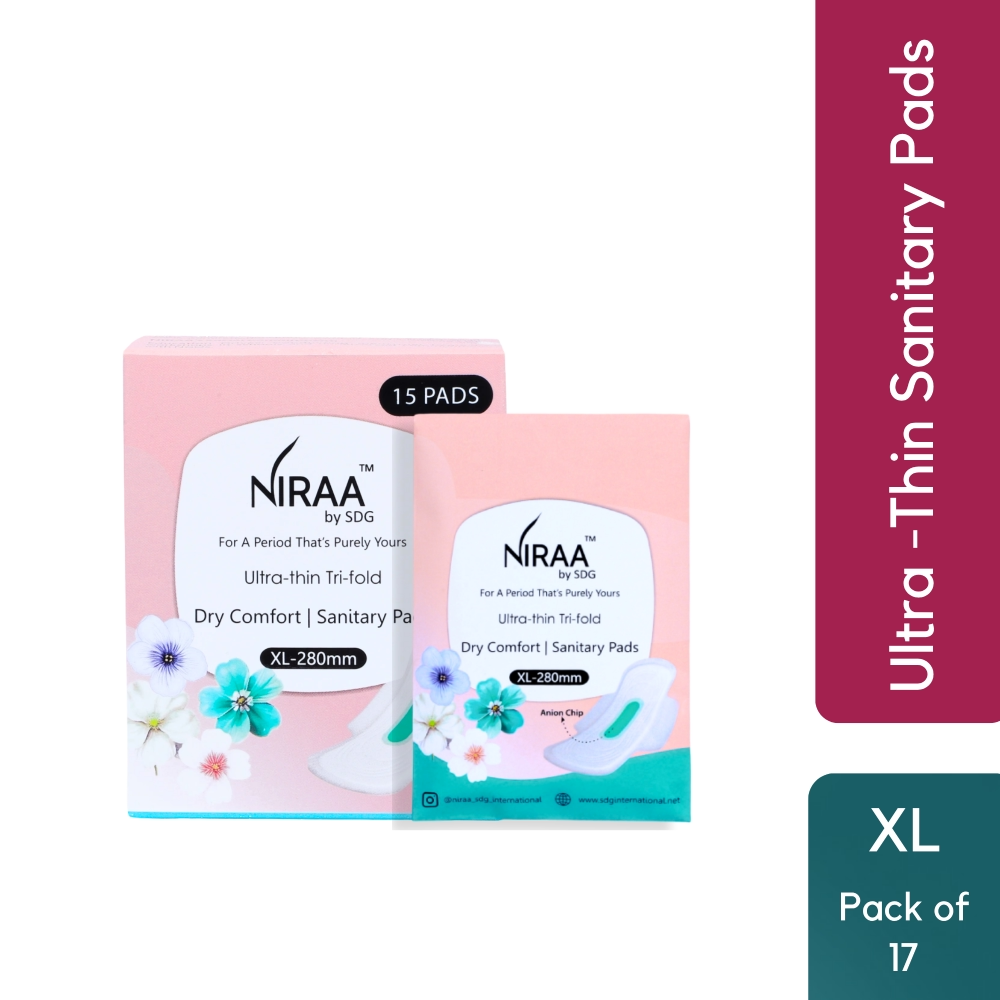
During stressful and unpredictable cycles, choosing soft and comfortable sanitary pads can help women feel more confident and supported throughout the day. NIRAA By SDG sanitary pads are designed to provide comfort, absorbency, and reliable protection to help women manage heavy-flow days with greater ease and confidence.
Prioritizing menstrual hygiene and comfort during stressful periods can also help reduce additional anxiety and support better overall menstrual wellness.
The Connection Between Mental Health and Menstrual Health
Mental health and menstrual health are deeply interconnected. Emotional well-being plays an important role in maintaining hormonal balance, which directly affects the menstrual cycle. When stress, anxiety, or emotional burnout become frequent, the body may respond through noticeable changes in periods, mood, energy levels, and overall physical health.
Many women experience increased irritability, fatigue, mood swings, or emotional sensitivity before and during their periods. While mild symptoms are common, chronic stress and anxiety can sometimes worsen PMS symptoms and make menstrual discomfort feel more intense.
Hormones involved in the stress response can also influence sleep, appetite, energy, and emotional regulation, all of which contribute to menstrual wellness. This is why women dealing with ongoing stress may experience irregular periods, painful cramps, or changes in menstrual flow alongside emotional exhaustion.
Common mental health-related factors that may affect menstrual cycles include:
- Chronic stress and anxiety
- Emotional burnout
- Sleep disturbances
- Overthinking and mental fatigue
- Work or academic pressure
- Lack of emotional support
Recognizing the mental health and menstrual health connection matters because it changes how you respond to symptoms. Instead of treating period pain or mood swings in isolation, addressing the underlying stress can ease both at once.
Lifestyle Factors That Worsen Stress and Period Problems
Daily lifestyle habits can have a major impact on both stress levels and menstrual health. In many cases, irregular routines, unhealthy habits, and emotional exhaustion can worsen hormonal imbalance and make period-related symptoms more noticeable.
Modern lifestyles often leave little time for proper rest, nutrition, or self-care, which can affect how the body regulates hormones and manages stress. Over time, these factors may contribute to irregular periods, painful cramps, fatigue, and changes in menstrual flow.
Poor Sleep
Sleep plays an important role in hormone recovery and overall body function. Lack of quality sleep can increase cortisol levels and interfere with the hormones responsible for regulating menstrual cycles.
Women who regularly experience poor sleep may notice:
- Increased stress levels
- Delayed or irregular periods
- Fatigue during menstruation
- Worsened PMS symptoms
Maintaining a healthy sleep routine can help support hormonal balance and menstrual wellness.
Poor Diet and Excess Caffeine
Nutritional deficiencies and irregular eating patterns affect reproductive hormones and energy levels. Diets lacking iron, protein, vitamins, and healthy fats can contribute to fatigue, weakness, and hormonal imbalance during periods. Skipping meals, emotional eating, and relying on processed or sugary foods add to this strain on the body.
High caffeine intake specifically has also been linked to:
- Increased anxiety
- Poor sleep quality
- Mood swings
- Stronger PMS symptoms
Balancing caffeine intake and eating nutrient-rich foods can help support better menstrual health.
Work Pressure and Burnout
Long working hours, academic pressure, and constant multitasking can create chronic emotional stress. Over time, burnout can affect sleep, hormone regulation, mental health, and menstrual cycle regularity.
Many women experience stress-related menstrual changes during:
- Exam periods
- Workplace deadlines
- Emotional stress at home
- Physically exhausting routines
Lack of Physical Activity
A sedentary lifestyle can negatively affect circulation, stress management, and hormonal health. Regular physical activity helps improve mood, reduce stress hormones, and support healthier menstrual cycles.
Simple activities like walking, stretching, yoga, or light exercise can help women manage stress and improve overall well-being.
5 Practical Ways to Manage Stress for Better Menstrual Health
Managing stress is not only important for mental well-being but also for maintaining a healthier menstrual cycle. Small lifestyle changes and self-care habits can help regulate hormones, improve mood, and reduce the impact of stress on periods over time.
Here are some practical ways to support better menstrual health and reduce stress-related period problems:
Prioritize Sleep
Quality sleep plays a major role in hormone balance and stress recovery. Poor sleep can increase cortisol levels and worsen symptoms like fatigue, mood swings, and irregular periods.
Try to:
- Aim for 7–8 hours of sleep daily
- Maintain a consistent sleep schedule
- Reduce screen time before bed
- Create a calm sleeping environment
Good sleep habits can help the body recover physically and emotionally.
Practice Deep Breathing and Relaxation
Relaxation techniques can help calm the nervous system and reduce stress hormones. Even a few minutes of mindfulness each day may help improve emotional well-being and reduce menstrual discomfort.
Helpful stress-management practices include:
- Deep breathing exercises
- Meditation
- Mindfulness activities
- Yoga and stretching
These activities may also help reduce muscle tension and period cramps.
Exercise Regularly
Regular physical activity helps improve blood circulation, reduce stress, and support hormone regulation. Exercise also releases endorphins, which can naturally improve mood and reduce discomfort during periods.
Simple activities that can help include:
- Walking
- Light workouts
- Stretching exercises
- Yoga
- Cycling
Consistency matters more than intense exercise routines.
Eat Balanced and Iron-Rich Foods
Nutrition plays an important role in menstrual wellness and energy levels. Eating balanced meals with iron-rich foods can help support the body during menstruation and reduce fatigue caused by heavy flow.
Focus on:
- Staying hydrated
- Eating fruits and vegetables
- Including iron-rich foods
- Reducing excessive processed foods and sugar
Healthy eating habits can also support better hormonal balance over time.
Track Your Menstrual Cycle
Tracking your menstrual cycle can help you recognize patterns linked to stress, lifestyle changes, and hormonal shifts. Monitoring symptoms like flow, cramps, mood changes, and cycle timing may help identify when stress is affecting your periods.
Many women find it helpful to use:
- Period tracking apps
- Journals or calendars
- Symptom tracking notes
Understanding your cycle better can help you prepare for changes and seek support when needed.
Keeping comfortable and reliable sanitary pads handy during unpredictable periods can also help reduce stress and improve confidence during heavy-flow days. Prioritizing self-care, emotional wellness, and menstrual hygiene together can make a meaningful difference in overall menstrual health.
Why Menstrual Health Awareness Still Matters in India
Despite growing awareness around women’s health, menstrual health is still surrounded by stigma and silence in many parts of India. Conversations about periods, hormonal health, and menstrual problems are often avoided, leaving many women unsure about what is normal and when they should seek support.
For many girls and women, period-related concerns such as irregular cycles, severe cramps, heavy bleeding, or stress-related menstrual changes are silently managed without proper awareness or guidance. This lack of open discussion can make it harder for women to understand the connection between stress, hormonal health, and menstrual wellness.
Menstrual stigma can also affect confidence, emotional well-being, education, and daily comfort. Adolescent girls may hesitate to ask questions about periods, while working women often continue managing discomfort quietly due to social pressure or lack of awareness.
At the same time, awareness around menstrual hygiene in India is improving, and more conversations are encouraging women to prioritize both physical and emotional health during menstruation. Understanding how lifestyle, stress, and hormonal balance affect periods can help women make informed decisions about self-care and reproductive health.
Creating open conversations around menstrual health awareness India is important for breaking myths, reducing shame, and helping women feel more confident discussing their experiences without fear or embarrassment.
Menstruation is a health topic, not something women should feel ashamed to discuss.
When Should You Consult a Doctor?
While occasional menstrual changes during stressful periods can be common, persistent or severe symptoms should not be ignored. If stress-related menstrual irregularities continue for multiple cycles or start affecting daily life, it is important to seek medical guidance.
Your menstrual cycle can often reflect underlying hormonal or reproductive health conditions that may require proper diagnosis and treatment.
Warning Signs to Watch For
You should consider consulting a healthcare professional if you experience:
- Missing periods for 3 or more consecutive cycles
- Extremely heavy bleeding that affects daily activities
- Severe menstrual pain that does not improve
- Persistent irregular periods
- Period symptoms interfering with sleep, work, or daily routines
- Sudden major changes in menstrual flow or cycle timing
These symptoms may not always be caused by stress alone. Persistent or severe irregularities can sometimes point to other underlying conditions (such as PCOS, thyroid imbalance, or endometriosis), so it’s worth getting checked rather than assuming stress is the only factor.
Early medical support can help identify the cause and improve long-term menstrual health and overall well-being.
It is also important to remember that every woman’s menstrual cycle is different. Tracking changes in your periods and discussing concerns openly with a healthcare professional can help you better understand your body and receive the right support when needed.
Myths About Stress and Periods
There are many misconceptions surrounding stress and menstrual health, which often prevent women from recognizing when their bodies may need attention or support. Understanding the facts can help improve menstrual health awareness and encourage healthier conversations around periods and hormonal wellness.
Stress Cannot Affect Periods
One of the most common myths is that stress only affects mental health and has nothing to do with menstrual cycles. In reality, stress directly influences the hormones that regulate ovulation, as covered earlier in this blog.
This myth often persists because the connection isn’t visible right away; the effects show up days or weeks later as a delayed or missed period, making it easy to overlook stress as the cause. Recognizing this link is the first step to addressing it rather than dismissing it.
Irregular Periods Are Always Normal
Occasional changes in menstrual cycles can happen due to lifestyle changes, travel, illness, or stress. However, frequent irregular periods should not always be ignored.
Persistent menstrual irregularities may sometimes indicate:
- Chronic stress
- Hormonal imbalance
- PCOS
- Thyroid-related conditions
- Other reproductive health concerns
Tracking cycle changes and seeking medical advice when symptoms continue is important for better menstrual wellness.
Only Physical Stress Matters
Many people assume only physical exhaustion affects menstrual health, but emotional stress can also significantly impact periods. Anxiety, emotional burnout, overthinking, work pressure, and mental fatigue can all influence hormonal balance and menstrual cycles.
Mental and emotional well-being are closely connected to reproductive health, which is why managing emotional stress is equally important for maintaining healthier periods.
Final Thoughts
Stress can affect menstrual health in several ways, including delayed periods, painful cramps, heavy flow, and emotional fatigue. While occasional cycle changes may happen during stressful phases, persistent irregularities should not be ignored. Your menstrual cycle often reflects your overall hormonal and emotional well-being.
Managing stress, maintaining healthy lifestyle habits, and paying attention to menstrual changes can help support better menstrual wellness over time.
Even with good habits in place, periods don’t always cooperate. On unpredictable days, having a pad you can rely on takes one less thing off your plate. NIRAA By SDG sanitary pads are designed for everyday comfort, absorbency, and protection, whatever your cycle looks like that month.
Frequently Asked Questions
Can stress delay your periods?
Yes, stress can interfere with hormone regulation and ovulation, which may delay your menstrual cycle. High cortisol levels caused by stress can affect the hormones responsible for maintaining regular periods.
Can stress cause heavy menstrual flow?
In some women, stress-related hormonal imbalance may contribute to changes in menstrual flow, including heavier bleeding. However, persistent heavy periods should be discussed with a healthcare professional.
Can anxiety make period cramps worse?
Yes, stress and anxiety can increase muscle tension, inflammation, and pain sensitivity, which may make menstrual cramps feel more intense during periods.
How long can stress affect menstrual cycles?
The impact of stress on menstrual cycles varies from person to person. For some women, cycles may return to normal within a few weeks, while others may experience irregularities for a few months until stress levels improve.
Is it normal for periods to change every time I’m stressed?
Occasional changes during a stressful week are common and usually not a concern. What matters more is a repeated pattern, the same kind of disruption happening cycle after cycle whenever stress is high.