Becoming a parent comes with countless small decisions, and choosing the right diaper is one of the most important ones. With so many options available today, many parents find themselves confused between disposable vs cloth diapers, especially when trying to balance comfort, hygiene, and practicality.
In India, this decision becomes even more important. The hot and humid climate, frequent sweating, and sensitive baby skin make diaper choice more than just a convenience decision. Add to that the cost factor and different parenting lifestyles, and it’s easy to feel overwhelmed.
Some parents prefer reusable options, while others rely on the ease of disposables. But the real question is not which option is “right” or “wrong”, it is what works best for your baby and your daily routine.
Today’s disposable diapers are designed to combine comfort, breathability, and high absorbency, making them a practical choice for modern Indian parents who want both convenience and care.
In this guide, we will break down everything you need to know about cloth vs disposable diapers in India, including their pros, cons, costs, and real-life usability, so you can make a confident and informed decision for your baby.
Why Choosing the Right Diaper Matters for Indian Parents
Choosing a diaper may seem like a small decision, but for Indian parents, it plays a big role in a baby’s daily comfort and overall hygiene. From the moment a baby starts wearing diapers regularly, the type you choose can directly impact their skin health, sleep quality, and even mood throughout the day.
One of the biggest factors in India is the climate. With long summers and high humidity in many regions, babies are more prone to sweating. This increases the chances of discomfort and skin irritation if the diaper does not provide proper breathability and dryness. That’s why many parents today look for breathable diapers for babies that can handle both heat and moisture effectively.
Another important concern is diaper rash prevention. Prolonged exposure to wetness or friction can lead to rashes, especially in sensitive skin. Whether you choose cloth or disposable, maintaining hygiene and choosing the right quality product becomes essential. Many parents now prefer options that offer long-lasting dryness and skin-friendly materials to reduce these risks.
Cost is also a key consideration for Indian families. Diapers are a daily essential, and over time, the expenses can add up. This is why parents often compare different options before deciding what fits their budget and lifestyle. However, it is equally important to consider the value of convenience, hygiene, and time saved, especially for working parents.
Finally, modern parenting is not just about affordability, it is about making informed and practical choices. Today, many parents look for diapers specifically designed for Indian climate conditions, helping them strike the right balance between comfort and care.
The right diaper is not just about absorption – it is about ensuring your baby stays dry, comfortable, and irritation-free throughout the day.
What Are Disposable and Cloth Diapers?
Before comparing features, costs, or usability, it is important to understand the basic difference between disposable vs cloth diapers. Each type is designed with a different purpose in mind, and knowing how they work helps parents make a more informed decision.
Disposable Diapers Explained
Disposable diapers are single-use diapers designed to provide high absorbency and convenience. They are made using multiple layers, including a soft inner layer that touches the baby’s skin and an absorbent core that locks in moisture to keep the baby dry for longer periods.
One of the key reasons many parents prefer disposable diapers is their ability to offer long-lasting dryness, which is especially helpful during nighttime or travel. Modern options are designed to be lightweight, comfortable, and suitable for Indian weather conditions, making them a practical choice for daily use.
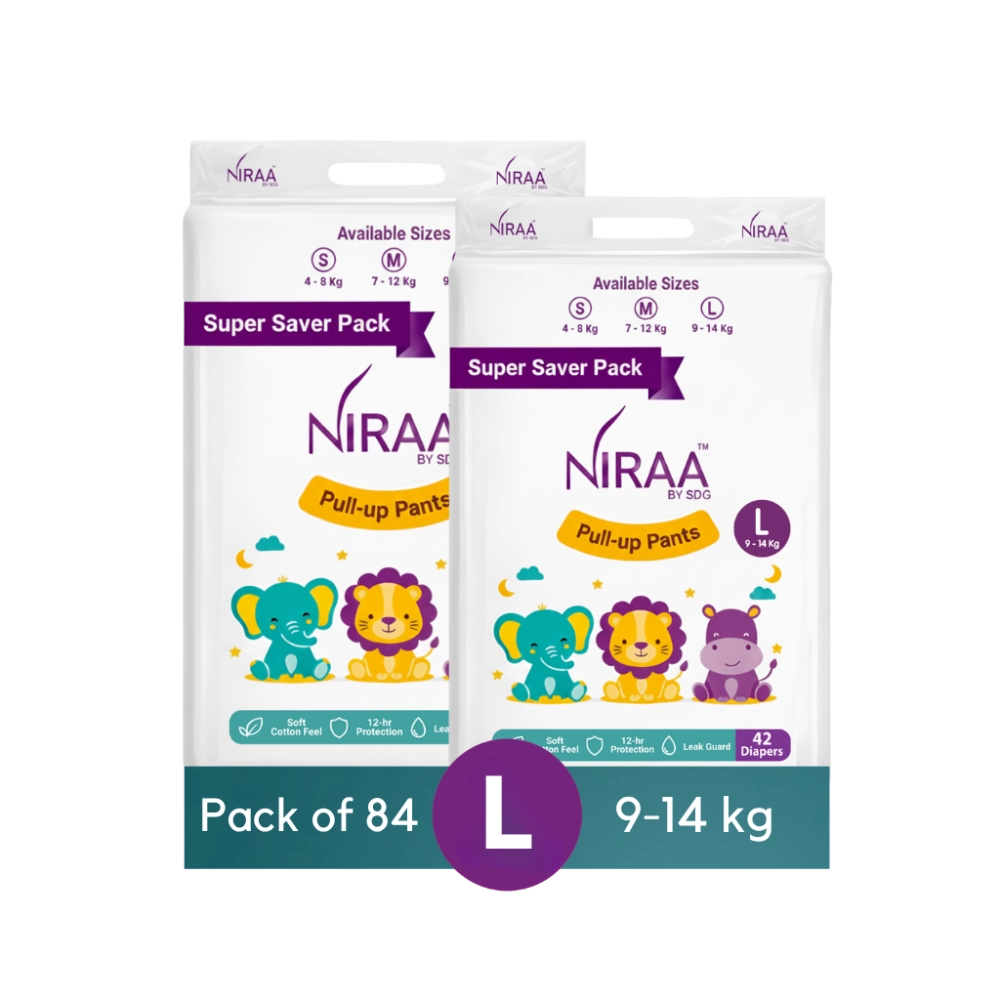
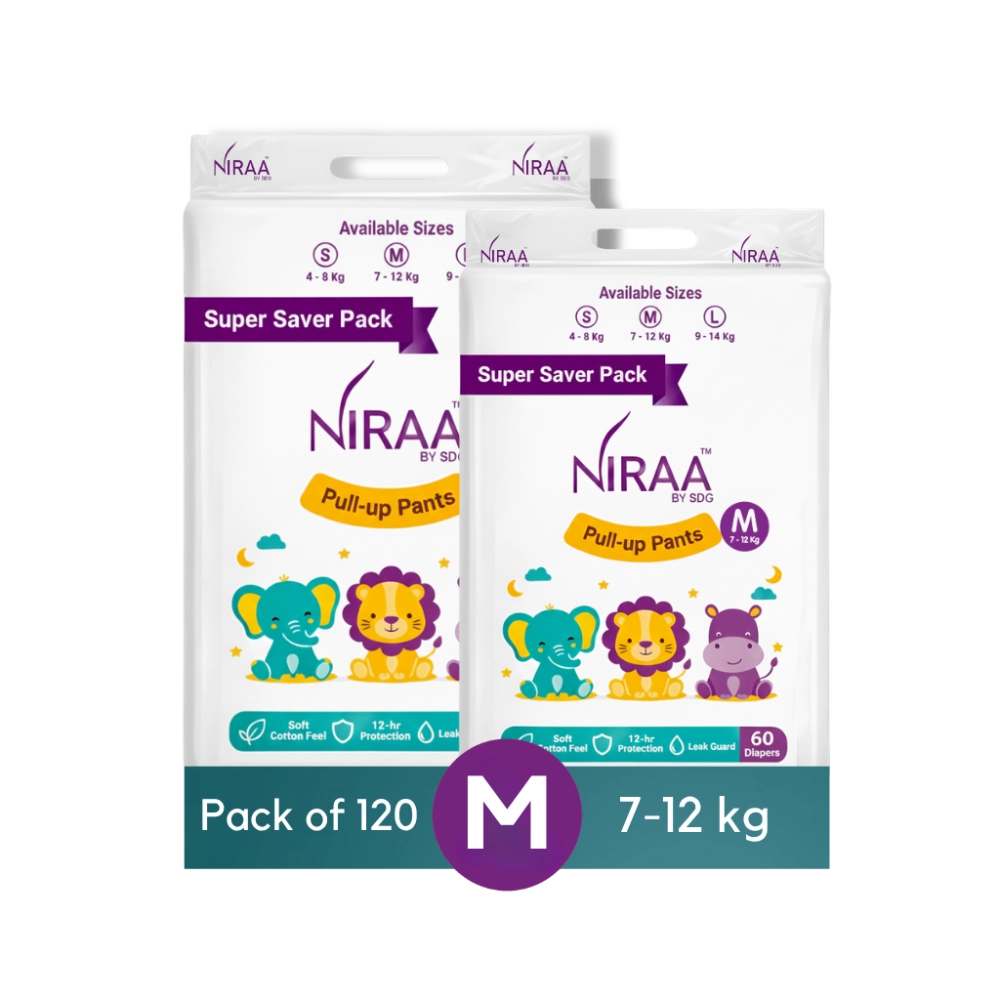
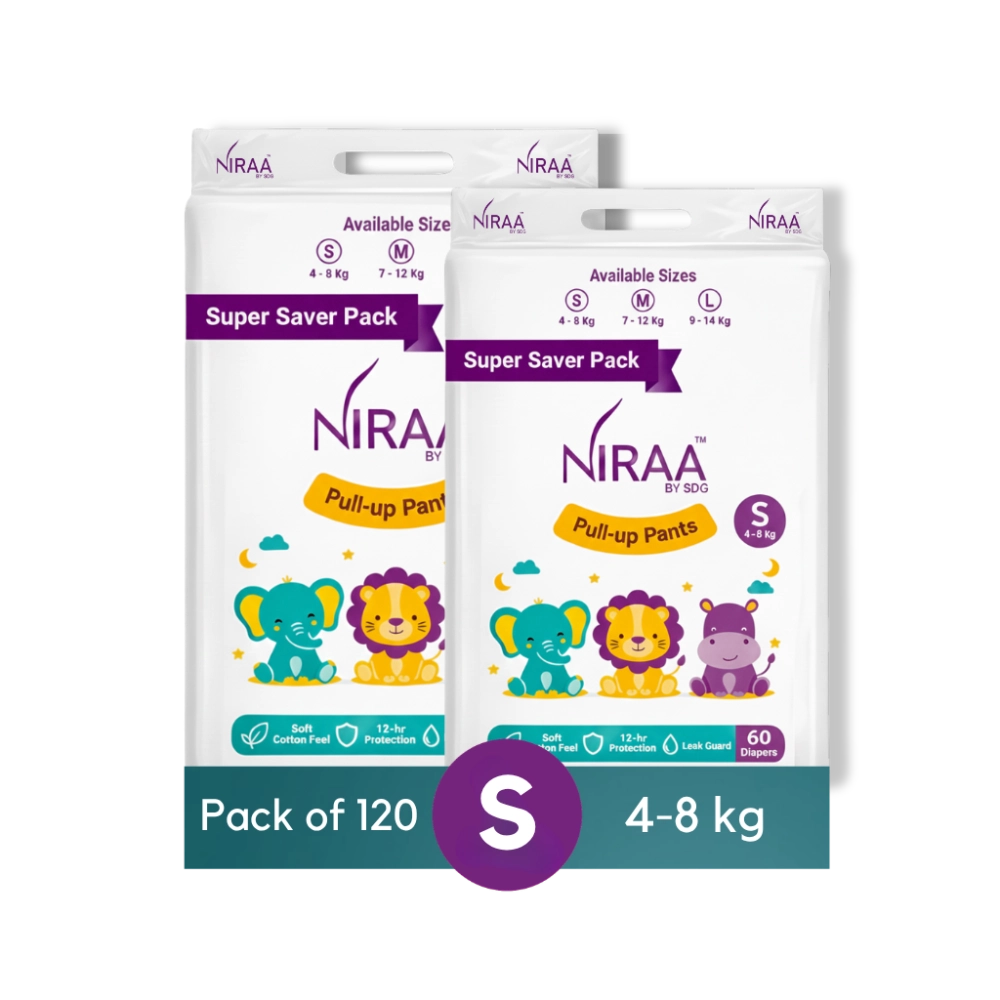
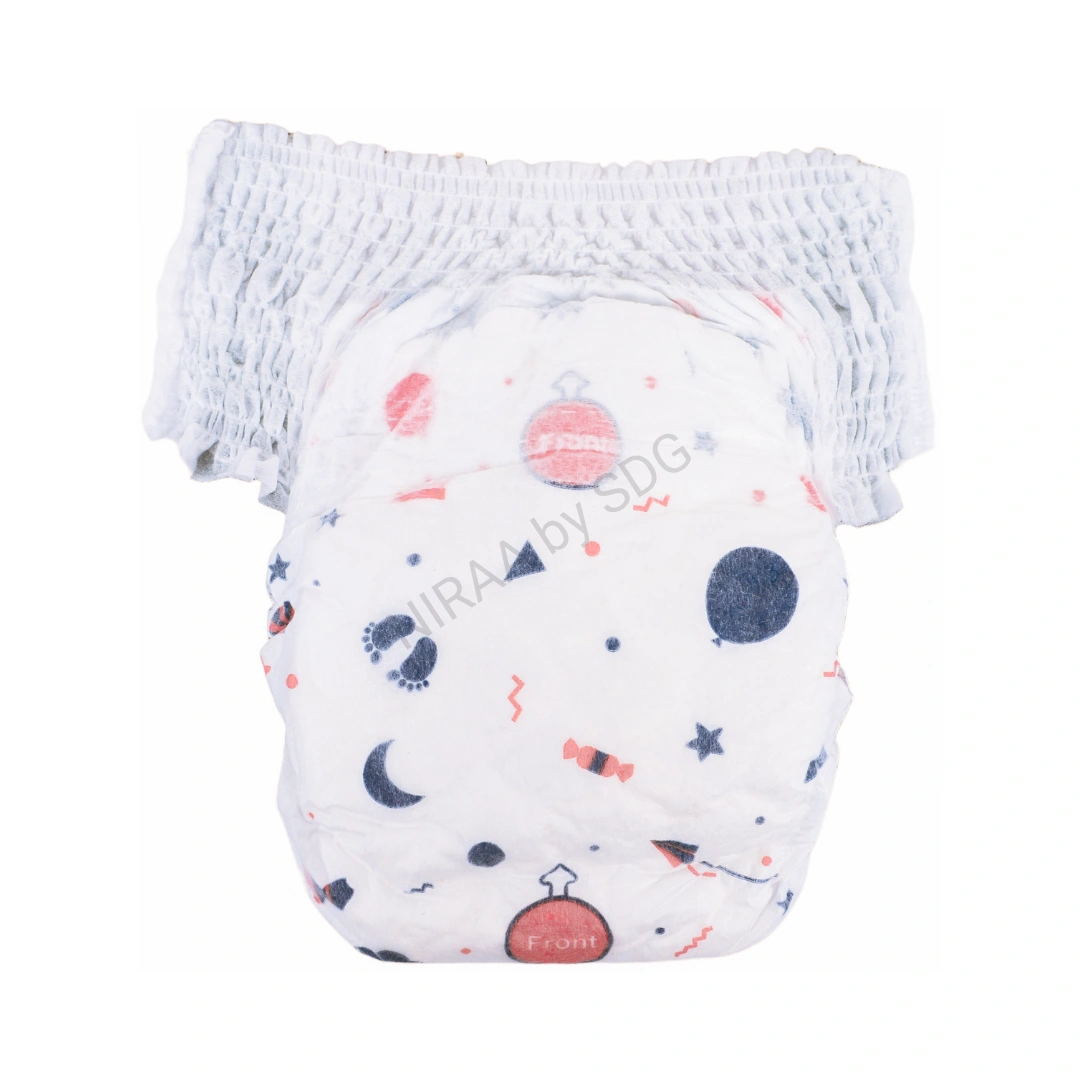
Modern disposable pull-up baby diapers are designed for ease, comfort, and better fit, supporting active babies while ensuring hygiene and convenience throughout the day.
Cloth Diapers Explained
Cloth diapers are reusable diapers made from natural or synthetic fabrics such as cotton or bamboo. Unlike disposables, they need to be washed and reused after each use. Many modern cloth diapers come with adjustable sizing and inserts that help improve absorbency.
They are often chosen by parents who prefer a more eco-friendly and reusable option. Cloth diapers are generally breathable and can feel softer on the baby’s skin, especially in hot weather conditions.
However, they require more effort in terms of washing, drying, and maintenance, which may not always be practical for every household, especially for working parents or during travel.
Disposable vs Cloth Diapers: Quick Comparison Table
When comparing disposable vs cloth diapers, parents often look for a quick and clear overview to understand which option fits their needs better. While both types serve the same purpose, they differ in terms of comfort, convenience, hygiene, and long-term usability.
Here’s a simple comparison to help you evaluate both options at a glance:
Disposable vs Cloth Diapers Comparison
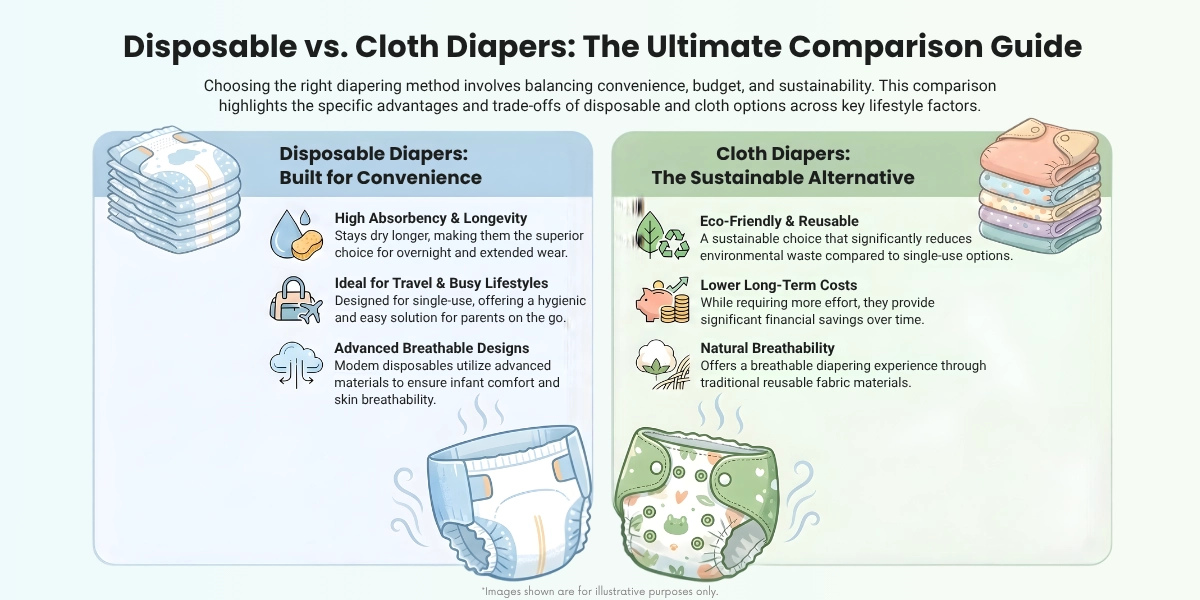
| Factor | Disposable Diapers | Cloth Diapers |
| Usage | Easy, hygienic, single-use | Reusable |
| Absorbency | High, stays dry longer | Moderate |
| Comfort | Advanced breathable designs available | Breathable |
| Convenience | Ideal for busy parents & travel | Requires effort |
| Cost | Higher upfront but saves time & effort | Lower long-term cost |
| Hygiene | Better for long wear & overnight | Needs proper washing |
| Eco Impact | Improving with better materials | Eco-friendly |
Pros and Cons of Disposable Diapers
Disposable diapers have become a preferred choice for many modern parents due to their convenience, hygiene, and ease of use. Especially in urban households and busy routines, they offer practical benefits that make daily diapering simpler and more manageable.
However, like any product, they come with both advantages and limitations. Understanding these clearly helps parents make a more informed decision.
Advantages of Disposable Diapers
1. Long-Lasting Absorbency : One of the biggest benefits of disposable diapers is their multi-layer design that absorbs and locks in moisture effectively. This helps keep the baby dry for longer durations, making them ideal for nighttime use and long outings.
2. High Convenience for Daily Use: Disposable diapers are extremely easy to use. There is no need for washing or drying, which makes them a practical option for working parents and travel situations.
3. Better Hygiene Management: Since they are single-use, disposable diapers reduce the risk of bacterial buildup when used correctly. This makes them a reliable option for maintaining hygienic diapering practices, especially outside the home.
4. Comfortable and Advanced Designs: Disposable diapers today are designed with soft materials, improved fit, and breathable layers, helping ensure comfort even during extended wear. Many options are also tailored for Indian climate conditions, balancing dryness with airflow.
Disadvantages of Disposable Diapers
1. Higher Ongoing Cost: Compared to reusable options, disposable diapers can become expensive over time, as they need to be purchased regularly.
2. Environmental Concerns: Disposable diapers contribute to landfill waste, which is a concern for environmentally conscious parents.
3. Possible Skin Sensitivity: Some babies may experience irritation if diapers are not changed frequently or if the material does not suit their skin. However, choosing high-quality, skin-friendly diapers can significantly reduce this risk.
What Parents Should Consider
While the cost and environmental impact are valid concerns, the convenience and hygiene of disposable diapers make them a practical choice for many families.
For situations like overnight use, travel, or long hours, disposable diapers often provide a level of ease and dryness that is difficult to match with other options.
Pros and Cons of Cloth Diapers
Cloth diapers are often considered a traditional yet evolving option in modern parenting. With newer designs and reusable features, they appeal to parents who prefer a more eco-conscious and natural approach to diapering.
However, while they offer certain benefits, they also come with practical challenges, especially in the context of Indian lifestyles and climate.
Advantages of Cloth Diapers
1. Gentle on Baby’s Skin: Cloth diapers are typically made from soft fabrics like cotton, which can feel comfortable against the baby’s skin. This makes them a preferred choice for parents looking for natural and breathable diapering options.
2. Breathable and Suitable for Short Durations: Due to their fabric composition, cloth diapers allow better airflow, which can be helpful in reducing heat buildup during hot and humid weather conditions.
3. Eco-Friendly and Reusable: One of the biggest advantages is that cloth diapers can be reused multiple times, reducing waste. This makes them appealing for families focusing on sustainable and eco-friendly parenting practices.
Disadvantages of Cloth Diapers
1. Frequent Changing Required: Cloth diapers do not lock in moisture the same way as disposable diapers. This means they need to be changed more often to keep the baby dry and comfortable.
2. Washing and Maintenance Effort: Using cloth diapers involves regular washing, drying, and proper hygiene practices. This can be time-consuming, especially for parents with busy schedules.
3. Less Practical for Travel and Night Use: Cloth diapers may not be the most convenient option during travel or overnight, where long-lasting dryness and ease of use become more important.
What Parents Should Consider
Cloth diapers can work well in controlled environments, such as when the baby is at home and frequent changes are manageable. However, they may require more effort and planning compared to disposable options.
For many families, the choice often depends on time availability, lifestyle, and daily routine, rather than just the type of diaper itself.
Cost, Environmental Impact & Skin Health in India
When choosing between disposable vs cloth diapers, most parents in India look beyond just convenience. Factors like monthly cost, environmental impact, and baby skin health play a major role in making the final decision.
Understanding these aspects can help you choose a diapering approach that fits both your lifestyle and your baby’s needs.
Monthly Cost of Disposable Diapers in India
Disposable diapers are a daily essential, which means they come with a recurring cost. On average, a baby may require multiple diaper changes in a day, especially during the early months.
This can add up to a significant monthly expense over time. However, many parents also consider the value of time, convenience, and hygiene that disposable diapers offer, especially when managing work and household responsibilities.
Long-Term Savings with Cloth Diapers
Cloth diapers usually involve a higher upfront investment, but they can be reused multiple times, making them more cost-effective in the long run.
For families who are able to manage regular washing and maintenance, cloth diapers can help reduce ongoing expenses. However, it is also important to consider additional factors like water usage, detergent costs, and time investment.
Environmental Impact of Disposable Diapers
One of the most discussed concerns around disposable diapers is their contribution to waste. Since they are single-use, they do add to landfill accumulation over time, which is an important consideration for environmentally conscious parents.
However, for many families, the convenience and hygiene benefits outweigh this concern, especially when managing busy schedules or ensuring consistent dryness for their baby.
Cloth Diapers as a Greener Choice
Cloth diapers are often seen as a more eco-friendly option, as they reduce daily waste. Reusability is their biggest advantage when it comes to sustainability.
However, it is important to note that washing and drying also consume water and energy, which contributes to their environmental footprint in a different way.
Skin Health & Diaper Rash in Indian Climate
In India’s hot and humid conditions, baby skin care becomes especially important. Prolonged exposure to moisture, sweat, and friction can increase the risk of diaper rash.
The key to preventing this is not just the type of diaper, but also regular changing, proper cleaning, and choosing materials that support dryness and breathability.
High-quality diapers that maintain a balance between absorbency and airflow can help keep the baby comfortable and reduce the risk of diaper rash.
What This Means for Parents
There is no single perfect option when it comes to cost, environment, or skin health. Each factor depends on how the diaper is used and maintained.
For many Indian parents, the focus is shifting toward practical solutions that combine hygiene, comfort, and ease of use, rather than choosing based on just one factor alone.
Cloth vs Disposable Diapers for Different Situations
When it comes to choosing between cloth vs disposable diapers, the best option often depends on the situation rather than a single fixed choice. Different times of the day and different environments require different levels of comfort, convenience, and absorbency.
Understanding when to use which type can help parents make smarter, more practical decisions.
At Home
At home, where frequent diaper changes are easier to manage, some parents prefer using cloth diapers for short durations. Since there is access to washing facilities and time for monitoring, this setup can work well during the day.
However, many parents also continue using disposable diapers at home for ease and hygiene, especially when managing multiple responsibilities.
At Night
Nighttime is one of the most important situations to consider. Babies need uninterrupted sleep, and frequent diaper changes during the night can disturb their rest.
In such cases, disposable diapers are often preferred because they provide long-lasting dryness and better moisture locking, helping keep the baby comfortable for longer hours.
Disposable diapers with higher absorbency are especially useful here, as they can handle overnight usage without compromising on comfort or breathability.
Travel & Outings
During travel or outdoor activities, convenience becomes a top priority. Managing cloth diapers outside the home can be challenging due to the need for storage and washing.
Disposable diapers offer a hassle-free and hygienic solution, making them the go-to choice for most parents while traveling or during outings.
Summer Weather
In hot and humid weather, breathability becomes an important factor. Cloth diapers may feel lighter and airy for short-term use.
At the same time, many disposable diapers now feature air-circulation layers that help reduce heat buildup while maintaining dryness, making them suitable even in Indian summer conditions.
What This Means for Parents
Instead of choosing one type for all situations, many parents today focus on flexibility and practicality.
Use cloth diapers when frequent changes are manageable
Use disposable diapers when you need dryness, convenience, and reliability
This approach helps balance comfort, hygiene, and ease of use without overcomplicating daily routines.
Are Cloth Diapers Practical in Indian Weather & Homes?
Cloth diapers can seem like a simple and eco-friendly option, but their practicality often depends on real-life conditions. In India, factors like weather, household setup, and daily routines play a major role in how easy or challenging cloth diapering can be.
Before choosing this option, it is important to understand how it fits into different Indian lifestyles.
Cloth Diapers in Hot & Humid Climate
India’s climate is largely hot and humid for most of the year. In such conditions, babies tend to sweat more, which can increase discomfort if the diaper is not changed frequently.
While cloth diapers are breathable, they may retain moisture longer, requiring more frequent changes to keep the baby dry. This can sometimes become difficult to manage throughout the day.
On the other hand, many parents today prefer solutions that can maintain dryness while still allowing airflow, especially during warmer months.
Managing Washing & Drying in India
One of the biggest challenges with cloth diapers is the need for regular washing and proper drying.
- Frequent washing is required to maintain hygiene
- Sun drying is important to prevent bacterial growth
- During monsoon or winter, drying can take longer
In homes where time or space is limited, managing this routine consistently can become difficult.
Urban vs Tier 2 Parenting Setups
Lifestyle plays a key role in diaper choices.
- In urban households, where both parents may be working, managing cloth diapers daily can be time-consuming
- In some Tier 2 or semi-urban setups, where additional support may be available, cloth diapers can be easier to manage
However, across both setups, many parents are increasingly choosing options that offer convenience without compromising on hygiene and comfort, especially for daily use.
What This Means for Parents
Cloth diapers can work well in certain conditions, but they require time, effort, and consistency.
For many Indian families, especially those with busy routines, the focus is shifting toward solutions that are easy to manage, hygienic, and reliable throughout the day, without adding extra workload.
Now that we’ve explored how both options perform in real-world Indian conditions, let’s help you decide which approach works best for your family.
Which Diaper Is Best for Your Baby?
After understanding the differences, pros and cons, and real-life usage, the next question most parents ask is simple: which diaper is actually best for my baby?
The answer depends on your baby’s needs, your daily routine, and how much convenience and flexibility you require as a parent.
Choose Disposable Diapers If
Disposable diapers are a practical choice for many modern parents, especially when comfort, hygiene, and ease of use are priorities.
You may prefer disposable diapers if:
- You need long-lasting dryness, especially during nighttime
- You want a convenient solution for daily use and travel
- You prefer better hygiene with minimal effort
- Your baby needs consistent comfort in Indian weather conditions
Modern disposable diapers are designed to offer both absorbency and breathability, making them suitable for Indian babies and everyday use.
Consider Cloth Diapers If
Cloth diapers can be considered in situations where:
- You have time for frequent washing and maintenance
- You prefer a reusable and eco-conscious option
- Your baby is mostly at home and can be changed frequently
This option works best when there is enough time and support to manage regular diaper changes.
Hybrid Approach (Best of Both)
Many parents today are moving toward a hybrid diapering approach, which combines the benefits of both options. This means using cloth diapers at home for short durations while relying on disposable diapers for nighttime, travel, and long hours.
This approach allows parents to balance comfort, practicality, and convenience without depending entirely on one type.
What This Means for Parents
There is no single “perfect” diaper for every baby. The best choice is one that keeps your baby dry, comfortable, and irritation-free, while also fitting into your daily lifestyle.
For many Indian parents, disposable diapers have become the go-to option for busy routines where convenience and hygiene matter most.
How to Choose the Right Diaper Brand
Once you’ve decided the type of diaper that suits your baby, the next important step is choosing the right diaper brand. With so many options available in the market, selecting a product that ensures comfort, safety, and reliability becomes essential.
A good diaper is not just about absorption, it is about how well it supports your baby’s skin, movement, and overall daily comfort.
What to Look for in a Baby Diaper
When evaluating different options, here are a few key factors parents should consider:
Absorbency: A high-quality diaper should be able to lock in moisture effectively, keeping the baby dry for longer periods, especially during sleep or outings.
Breathability: In Indian weather conditions, breathability is crucial. Diapers that allow airflow help reduce heat buildup and keep the baby more comfortable.
Skin-Friendly Materials: Babies have delicate skin, so choosing diapers made with soft, gentle, and safe materials can help minimize the risk of irritation or rashes.
Proper Fit and Comfort: A well-fitted diaper prevents leakage and ensures ease of movement. Flexible designs are especially helpful for active babies.
What to Look for in Quality Diapers
While basic diapers may serve the purpose, quality diapers are designed to offer a better overall experience. They focus on enhanced comfort for longer wear, improved absorption and dryness, better fit and flexibility, and reduced chances of diaper rash.
Choosing a trusted brand that understands Indian climate conditions and baby comfort needs can make a noticeable difference in your baby’s daily routine.
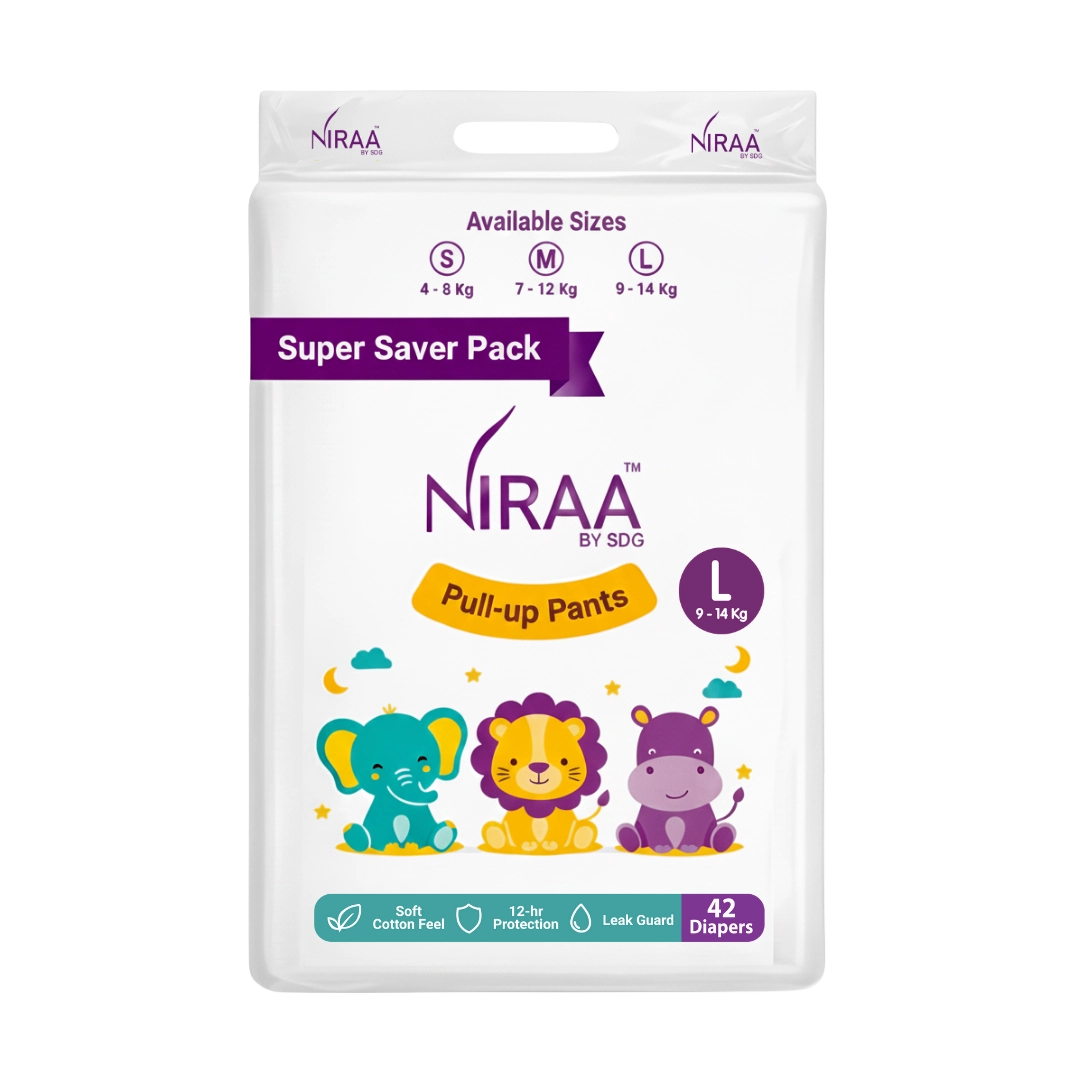
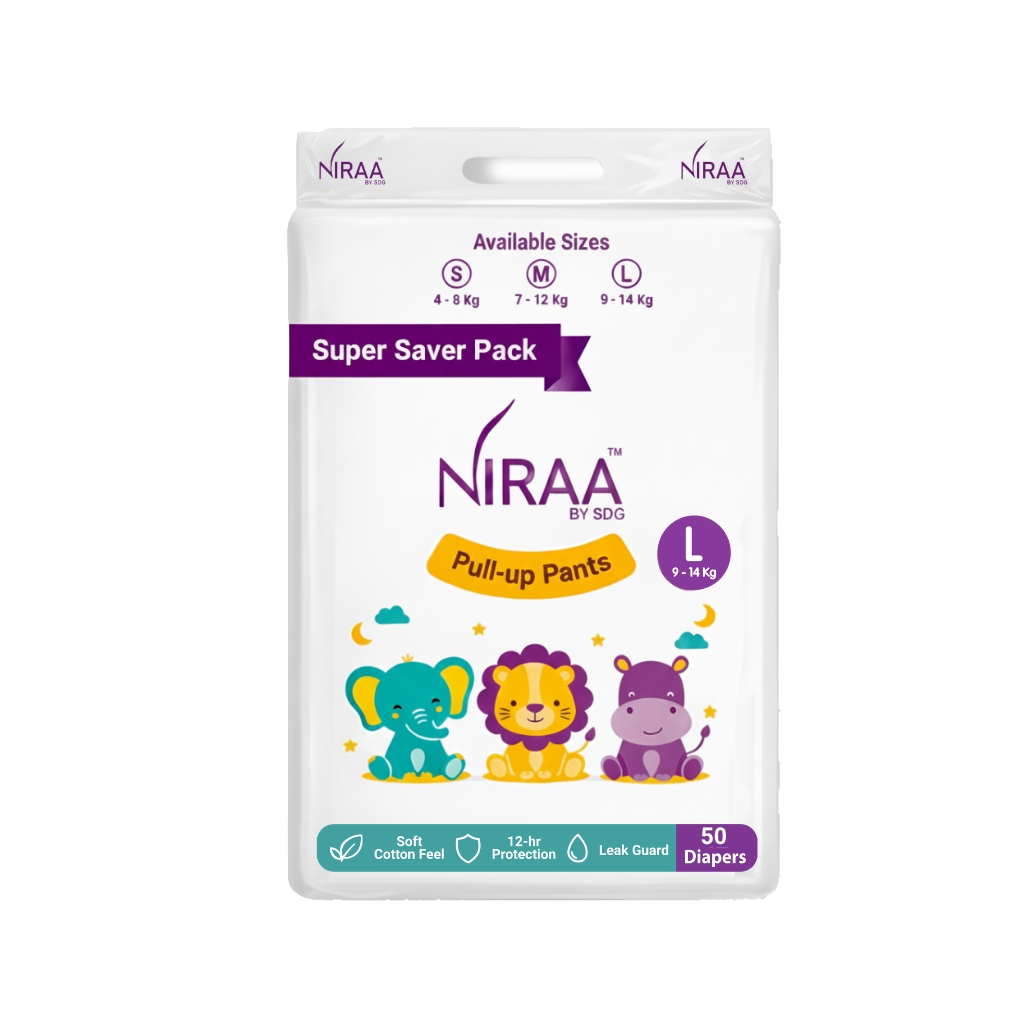
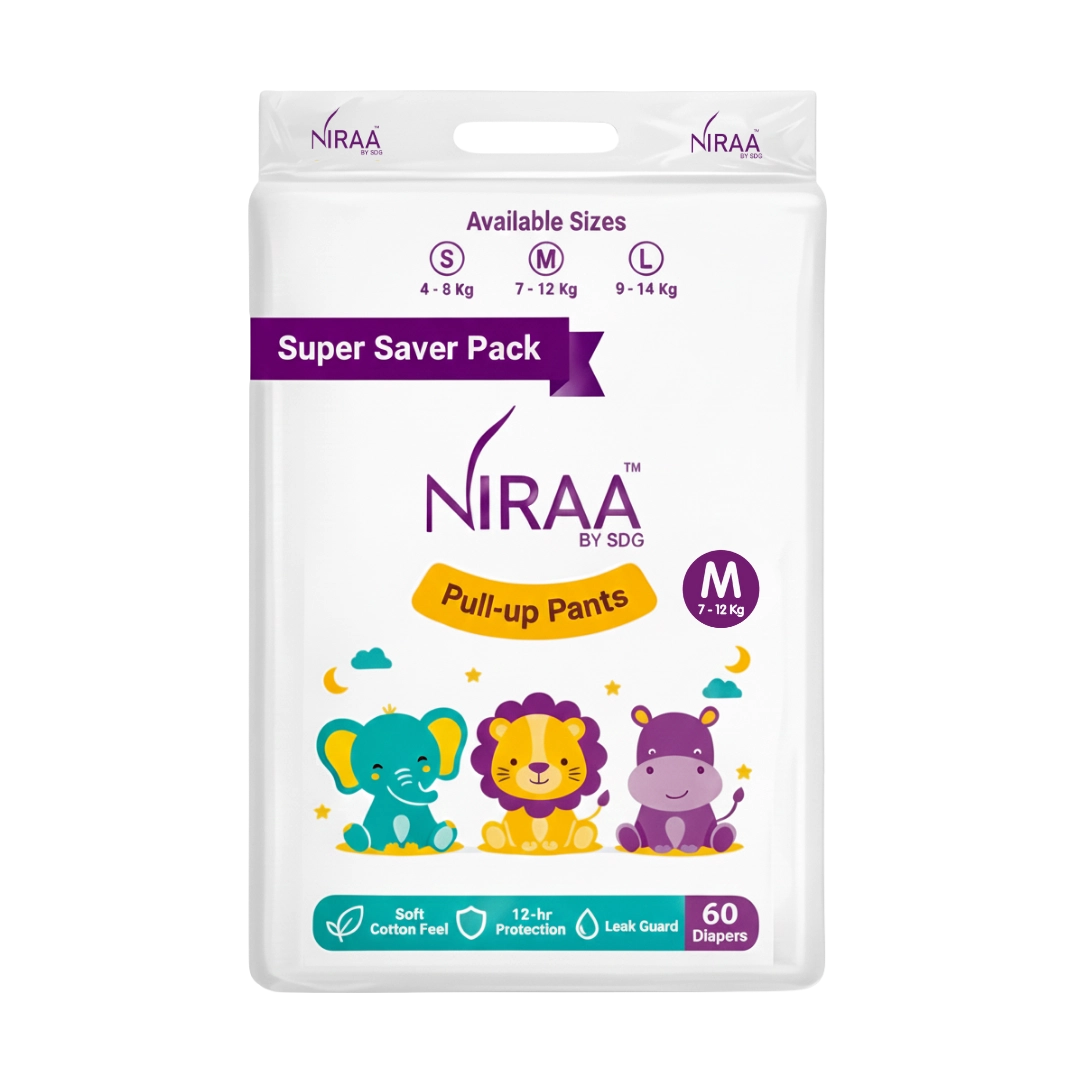
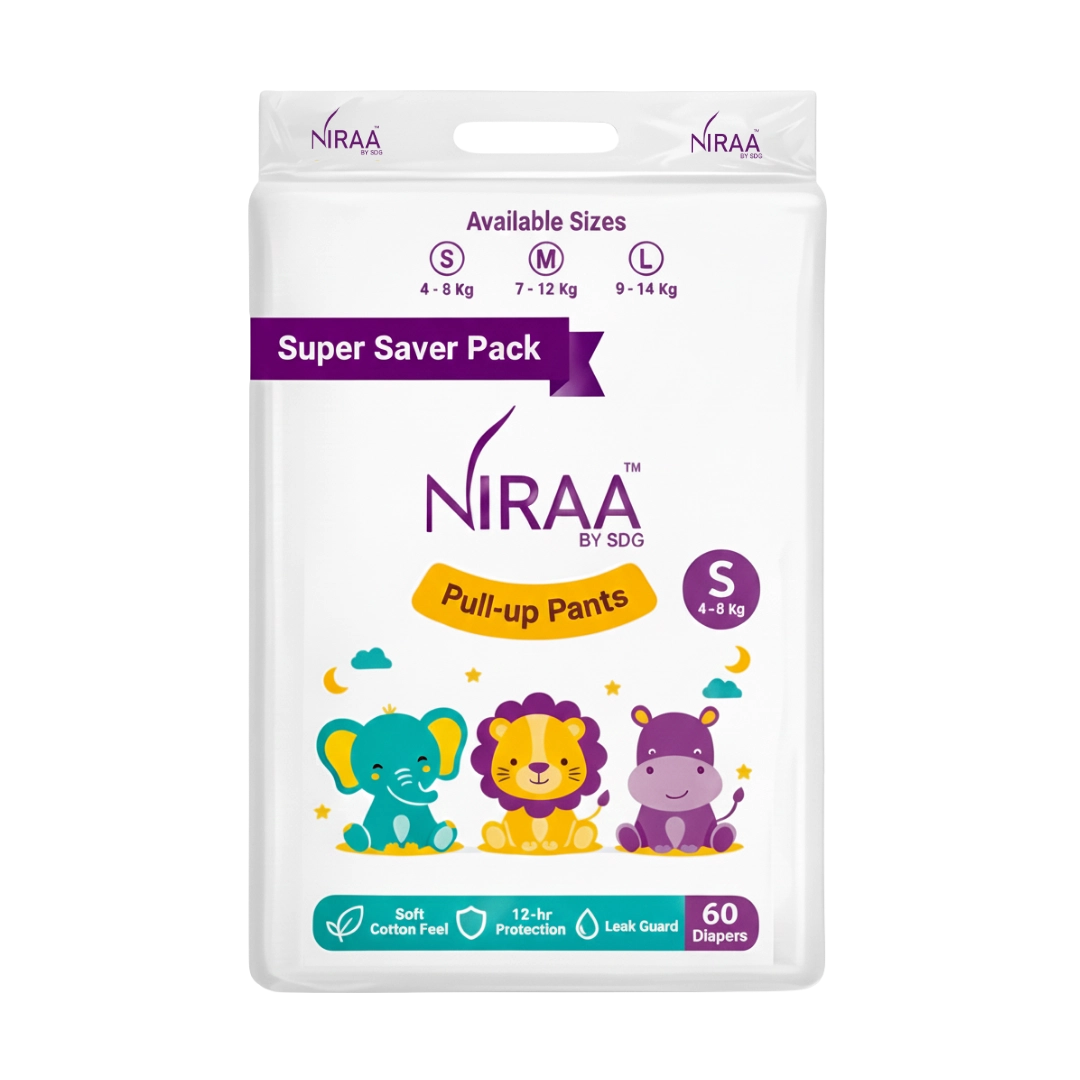
NIRAA’s baby diaper range is specifically designed to balance comfort, hygiene, and performance for everyday use in Indian climate conditions, making it a reliable choice for modern parents.
What This Means for Parents
The right diaper brand is one that aligns with your baby’s needs and your lifestyle. Instead of focusing only on price, it is important to consider overall value, comfort, and reliability when making your choice.
Expert Tips for Safe Diaper Use
No matter which type of diaper you choose, following the right practices is essential to keep your baby comfortable and healthy. Proper diapering is not just about convenience, it plays a key role in maintaining baby hygiene and preventing skin issues.
Here are some simple yet effective tips every parent should follow:
- Change Diapers Regularly: Frequent diaper changes are important to avoid prolonged exposure to moisture. Leaving a wet diaper on for too long can increase the risk of irritation and discomfort.
- Keep the Skin Clean and Dry: Always clean the diaper area gently during every change and allow the skin to dry before putting on a new diaper. This helps reduce the chances of diaper rash and infections.
- Use Moisture-Absorbing Powder in Humid Weather: During monsoon or summer months when humidity is high, applying a light layer of baby powder or cornstarch-based powder after cleaning and drying can help absorb excess moisture before putting on a fresh diaper. This is especially helpful in preventing heat rash and keeping the diaper area dry in humid conditions.
- Choose Breathable and Comfortable Options: Using diapers that support both absorbency and airflow can help maintain comfort, especially in hot and humid weather conditions.
- Ensure the Right Fit: A diaper that is too tight can cause friction, while a loose one may lead to leakage. Choosing the correct size ensures better protection and comfort for your baby.
- Watch for Early Signs of Rash: Redness, irritation, or discomfort can be early signs of diaper rash. Addressing these signs early can prevent further skin issues.
Good diapering habits matter just as much as the type of diaper you choose. Even the best products perform effectively only when used correctly.
By maintaining proper hygiene, choosing the right fit, and being attentive to your baby’s needs, you can ensure a safe and comfortable diapering experience every day.
Common Diapering Mistakes Parents Make
Even with the best intentions, many parents unknowingly make small diapering mistakes that can affect their baby’s comfort and skin health. Being aware of these common errors can help you avoid unnecessary issues and ensure a smoother diapering experience.
Common Mistakes
- Delaying Diaper Changes: One of the most common mistakes is waiting too long to change a diaper. Prolonged exposure to moisture can lead to discomfort and increase the risk of diaper rash.
- Choosing the Wrong Size: Using a diaper that does not fit properly can cause leakage, skin irritation, or marks on the baby’s skin. A well-fitted diaper is essential for both comfort and protection.
- Ignoring Early Signs of Rash: Sometimes mild redness or irritation is overlooked. Addressing these signs early can prevent them from developing into more severe diaper rash.
- Over-Relying on One Type of Diaper: Using only one type of diaper in all situations may not always be practical. Different situations, like nighttime or travel, may require better absorbency and convenience, while shorter durations may allow more flexibility.
Avoiding these common mistakes can make a significant difference in your baby’s daily comfort. Small changes, like timely diaper changes and choosing the right fit, can help prevent many common issues.
Parenting is a learning process, and being mindful of these factors ensures a more comfortable, hygienic, and stress-free experience for both you and your baby.
Cloth vs Disposable Diapers: Myths vs Facts
When it comes to cloth vs disposable diapers, many parents come across conflicting opinions and outdated information. These myths can make decision-making more confusing than it needs to be.
Let’s break down some of the most common misconceptions and understand the facts behind them.
Myth: Cloth Diapers Are Unhygienic
Fact:
Cloth diapers can be hygienic when they are washed and dried properly. Maintaining proper cleaning routines, using the right detergents, and ensuring complete drying are essential to keep them safe for reuse.
At the same time, disposable diapers offer a single-use hygienic solution, which reduces the risk of contamination when used and disposed of correctly.
Myth: Disposable Diapers Always Cause Rashes
Fact:
Diaper rash is usually caused by prolonged moisture, friction, or infrequent changes, not just the type of diaper.
High-quality disposable diapers that provide good absorbency and breathability can actually help reduce the chances of rashes when used properly. Regular changing and maintaining hygiene are the most important factors.
Myth: Cloth Diapers Are Too Expensive
Fact:
Cloth diapers may have a higher upfront cost, but they can be reused, making them cost-effective over time.
However, it is also important to consider the effort, time, water usage, and maintenance involved. For many parents, convenience and ease of use play an equally important role in their decision.
Instead of relying on myths, it is important to focus on practical usage, quality, and your baby’s comfort.
Both cloth and disposable diapers can work well when used correctly. The key is to choose an option that fits your routine and ensures your baby stays clean, dry, and comfortable.
Final Verdict – What Works Best for Indian Babies
Choosing between disposable and cloth diapers ultimately comes down to what works best for your baby and your daily routine. While cloth diapers can be a cost-effective and eco-friendly option for parents who can manage frequent washing, many Indian families today prefer the convenience, hygiene, and reliability of premium disposable diapers, especially for long hours, nighttime, and travel. In reality, there is no single perfect choice, and many parents find a balanced approach works best. The key is to ensure your baby stays comfortable, dry, and irritation-free, while you choose a solution that fits seamlessly into your lifestyle.
FAQs
Which is better for babies in India, cloth or disposable diapers?
Both options have their benefits. Cloth diapers are reusable and eco-friendly, while disposable diapers offer better convenience, hygiene, and long-lasting dryness. Many Indian parents prefer disposable diapers for daily use and a hybrid approach for flexibility.
How often should I change my baby’s diaper?
Ideally, diapers should be changed every 2 to 4 hours or immediately after soiling. Frequent changes help prevent diaper rash and keep your baby comfortable.
Are disposable diapers safe for baby skin?
Yes, high-quality disposable diapers made with soft and breathable materials are safe for baby skin. Choosing premium diapers and maintaining proper hygiene can help reduce the risk of irritation.
Do cloth diapers cause more rashes than disposable diapers?
Not necessarily. Diaper rash is usually caused by moisture, friction, or infrequent changes. Proper hygiene and timely diaper changes are more important than the diaper type.
Can I use disposable diapers at night for my baby?
Yes, disposable diapers are often preferred for nighttime use because they provide long-lasting absorbency and help keep the baby dry for longer hours.
What is the best diapering approach for Indian parents?
Many parents follow a hybrid approach by using cloth diapers at home and disposable diapers for nighttime, travel, and long hours. This balances comfort, convenience, and practicality.