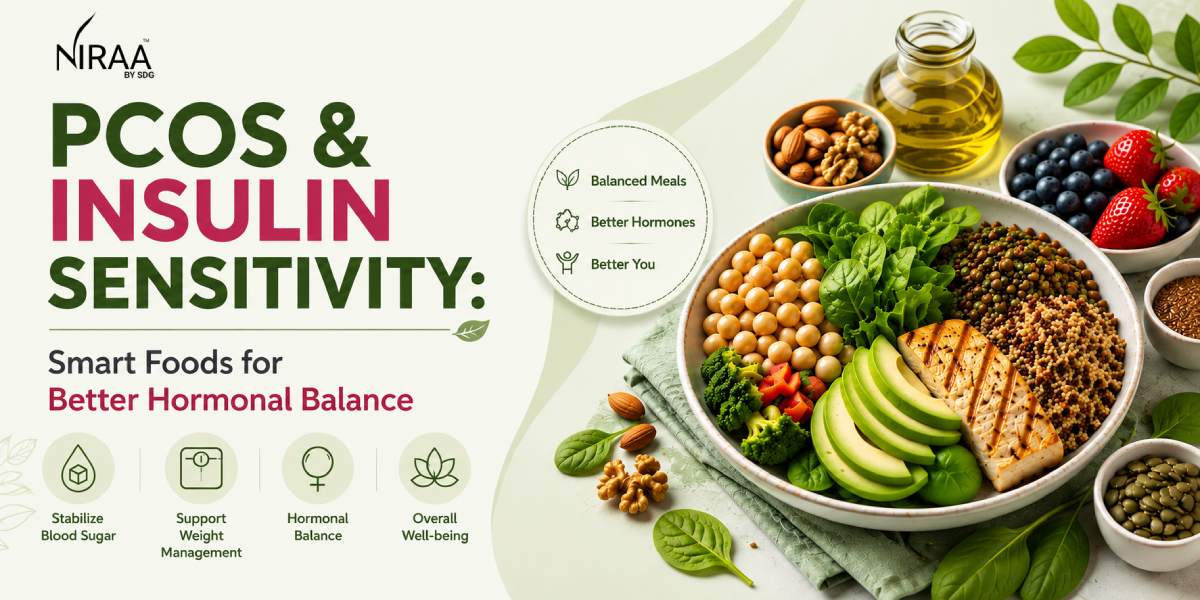
PCOS is becoming an increasingly common concern among young girls and women, with changing lifestyles, dietary habits, stress, poor sleep, and reduced physical activity often discussed alongside the condition. But PCOS is not only about irregular periods or reproductive health. It can also affect how the body responds to insulin, making insulin sensitivity an important part of the bigger picture.
When insulin resistance develops, higher insulin levels can influence androgen production and contribute to hormonal imbalance. This is where everyday food choices can make a difference. A balanced diet rich in fibre, protein, healthy fats, and nutrient-dense foods can support healthy blood sugar levels and overall metabolic health. In this guide, we’ll explore smart food choices that may support insulin sensitivity and hormonal balance as part of a healthy PCOS lifestyle.
Understanding the Connection Between PCOS and Insulin Sensitivity
PCOS, or polycystic ovary syndrome, is a hormonal condition that can affect menstrual cycles, ovulation, androgen levels, and metabolic health. One important part of this metabolic connection is insulin sensitivity, which refers to how effectively the body’s cells respond to insulin and use glucose for energy.
When the body becomes less sensitive to insulin, it may produce more insulin to keep blood glucose levels under control. In some women with PCOS, higher insulin levels can encourage the ovaries to produce more androgens, which may interfere with normal ovulation and contribute to symptoms such as irregular periods, acne, excess hair growth, and difficulty managing weight.
Improving insulin sensitivity is therefore an important part of supporting overall PCOS health. Along with appropriate medical care, regular physical activity, adequate sleep, and balanced nutrition can help support healthy blood sugar regulation and metabolic health.
How Smart Food Choices Can Support Hormonal Balance
Food choices can influence how the body manages blood sugar, energy, and overall metabolic health. For women with PCOS, building meals around nutrient-rich foods, and even aligning them with your cycle, can support better blood sugar regulation rather than relying on restrictive diets.
Fibre is particularly useful because it can slow the digestion and absorption of carbohydrates, helping support a steadier rise in blood glucose after meals. Protein and healthy fats can also help with fullness and provide more sustained energy when included as part of balanced meals. Foods rich in antioxidants, meanwhile, can contribute to the body’s defence against oxidative stress.
The goal is not to find one “perfect” food for PCOS. Instead, a varied and balanced diet that includes fibre-rich foods, quality protein, healthy fats, whole grains, vegetables, and fruits can support metabolic health and complement other healthy lifestyle habits.
Smart Foods That May Support Insulin Sensitivity in PCOS
There is no single food that can treat PCOS or improve insulin sensitivity on its own. However, choosing a variety of nutrient-dense foods can help create a balanced eating pattern that supports blood sugar regulation and overall metabolic health. The following food groups offer useful combinations of fibre, protein, healthy fats, vitamins, minerals, and plant compounds that can fit into a PCOS-friendly diet.
Low-Glycemic Fruits
Fruits can be part of a balanced PCOS diet, especially when you choose whole fruits that provide fibre and have a relatively lower glycemic impact. Some nutrient-dense options also provide vitamins and plant compounds that support overall metabolic health.
- Jamun: Provides anthocyanins and other polyphenols that may support healthy glucose metabolism. Its fibre content also makes whole jamun a practical choice compared with sugary fruit-based drinks.
- Amla: One of the richest natural sources of vitamin C, along with polyphenols that contribute to its antioxidant profile. Fresh amla can be included in small portions as part of a balanced meal or snack.
- Kiwi: Provides vitamin C, fibre, and beneficial plant compounds. Its combination of fibre and nutrients makes whole kiwi a convenient addition to breakfast or a snack.
- Pomegranate: Provides polyphenols, including punicalagins, along with fibre when the whole arils are eaten. Pomegranate seeds can be added to salads, yogurt, or eaten as a whole-fruit snack.
For PCOS, the focus should not be on completely avoiding naturally occurring fruit sugars. Instead, choose whole fruits, keep portions appropriate, and consider pairing fruit with protein or healthy fats to create a more balanced snack or meal.
Whole Grains for Sustained Energy
Whole grains can be a useful part of a PCOS-friendly diet because they provide carbohydrates along with fibre and other nutrients. Compared with highly refined grains, many whole grains are digested more slowly, which can support a steadier release of glucose into the bloodstream.
- Oats: A convenient source of fibre, including beta-glucan, and an easy option for breakfast.
- Millets: Provide fibre, minerals, and complex carbohydrates and can be used in rotis, porridge, or other everyday meals.
- Brown rice: Retains more of the grain’s natural fibre and nutrients than white rice and can be included in balanced meals.
- Quinoa: Provides fibre and plant-based protein, making it a versatile option for salads, bowls, or as an alternative to refined grains.
The goal is not to eliminate carbohydrates. Choosing minimally processed, fibre-rich grains and keeping portions balanced can help provide sustained fuel while supporting healthier blood sugar management.
Protein-Rich Foods for Better Blood Sugar Control
Protein is an important part of a balanced PCOS diet because it can help you feel fuller for longer and support muscle health. Including protein in meals can also slow digestion and delay gastric emptying, which may contribute to a steadier blood sugar response after eating.
- Lentils: Provide plant-based protein and are also a good source of fibre, making them a practical choice for dals, soups, and salads.
- Chickpeas: Offer protein, fibre, and complex carbohydrates. They can be added to salads, curries, or roasted as a snack.
- Eggs: A convenient source of high-quality protein that can be included in breakfast or paired with vegetables for a balanced meal.
- Greek yogurt: Provides protein and can be combined with nuts, seeds, or whole fruits for a nutrient-dense snack.
- Paneer: Provides protein and can be included in balanced Indian meals with vegetables and whole grains.
Rather than eating carbohydrates on their own, pairing them with a protein source can make meals more satisfying and support a more balanced blood sugar response.
Healthy Fats That Support Hormonal Health
Healthy fats can be an important part of a balanced diet for women with PCOS. Nuts and seeds provide unsaturated fats, and some are particularly good sources of omega-3 fatty acids. Including them in appropriate portions can support overall metabolic health while adding flavour and texture to everyday meals.
- Almonds: Provide healthy fats, protein, fibre, and vitamin E. They make a convenient addition to breakfast or a snack.
- Walnuts: A good plant source of omega-3 fatty acid ALA and can be added to oats, salads, or yogurt.
- Flaxseeds: Rich in ALA and fibre. Ground flaxseeds can be mixed into oats, smoothies, or homemade foods.
- Chia seeds: Provide ALA, fibre, and minerals. They can be added to yogurt, overnight oats, or puddings.
- Pumpkin seeds: Provide unsaturated fats, protein, magnesium, and other nutrients that complement a balanced diet.
A small serving of nuts or seeds can be an easy way to add healthy fats to meals without making major changes to your usual eating pattern.
Anti-Inflammatory Foods Worth Adding to Your Diet
Along with fruits, whole grains, and protein-rich foods, certain vegetables, herbs, and spices can add beneficial plant compounds to a PCOS-friendly diet. Including a variety of these foods can provide nutrients and bioactive compounds that support overall wellness.
- Turmeric: Contains curcumin, a plant compound widely studied for its antioxidant and anti-inflammatory properties. It can be added to dals, vegetables, soups, and curries.
- Ginger: Provides gingerols and other bioactive compounds. Fresh ginger can be used in curries, soups, teas, or homemade dressings.
- Cinnamon: Contains compounds such as cinnamaldehyde and can add flavour without relying on added sugar. Sprinkle a small amount into oats, yogurt, or other suitable foods.
- Green leafy vegetables: Spinach, methi, and other leafy greens provide folate, vitamins, minerals, and various plant compounds that support a nutrient-rich diet.
These foods should complement an overall balanced eating pattern rather than be treated as individual remedies for PCOS.
Foods to Limit If You Have PCOS
Managing PCOS does not mean completely eliminating carbohydrates, sweets, or your favourite foods. Instead, the focus should be on limiting foods that are high in added sugars, refined carbohydrates, or heavily processed ingredients, especially when they make up a large part of the daily diet.
- Sugar-sweetened beverages: Soft drinks, sweetened juices, energy drinks, and sugary teas can provide a high amount of added sugar without much fibre or nutritional value.
- Refined carbohydrates: Foods made primarily with refined flour, such as white bread, pastries, and many packaged snacks, can be less filling and may have a greater impact on blood glucose.
- Highly processed snacks: Regular consumption of chips, packaged sweets, biscuits, and similar foods can add excess sugar, sodium, and unhealthy fats to the diet.
- Foods high in added sugar: Frequent intake of sweets, desserts, and sweetened breakfast products can make it harder to maintain a balanced eating pattern.
- Ultra-processed foods: These can be convenient, but relying on them frequently may reduce the overall nutritional quality of the diet.
The goal is moderation, not restriction. Occasional treats can fit into a balanced diet. What matters more is the overall quality and consistency of your eating pattern.
Simple Ways to Build a PCOS-Friendly Plate
A balanced plate can make healthy eating for PCOS feel simpler and more practical. Instead of focusing on individual “good” or “bad” foods, aim to combine different food groups so your meals provide fibre, protein, healthy fats, and quality carbohydrates.
Pair Fruits With Protein or Healthy Fats
Instead of having fruit juice or eating fruit alongside sugary snacks, pair whole fruit with foods such as nuts, seeds, or unsweetened Greek yogurt. This creates a more balanced snack and can help you stay satisfied for longer.
Prefer Whole Foods Over Highly Processed Alternatives
Whenever practical, choose whole fruits, whole grains, lentils and beans, nuts and seeds, and fresh vegetables. These foods can provide more fibre and nutrients than many highly processed alternatives.
Practise Mindful Eating
Pay attention to hunger and fullness cues, eat meals at a comfortable pace, and avoid overly restrictive rules. Consistency matters more than trying to follow a perfect diet every day.
Healthy Lifestyle Habits That Complement a PCOS Diet
Food is only one part of supporting metabolic and hormonal health with PCOS. Consistent lifestyle habits can work alongside a balanced diet to support insulin sensitivity, energy levels, and overall well-being.
- Regular physical activity: Walking, cycling, swimming, or other activities you enjoy can support glucose management and overall fitness.
- Strength training: Resistance exercises can help build and maintain muscle, which plays an important role in how the body uses glucose.
- Stress management: Chronic stress can affect overall well-being, hormonal balance, and make healthy routines harder to maintain. Practices such as breathing exercises, yoga, or relaxing activities may help.
- Quality sleep: Aim for a consistent sleep routine and adequate rest, as sleep plays an important role in metabolic health.
- Hydration: Drinking enough water throughout the day supports normal body functions and can help replace sugary beverages.
- Sustainable weight management: If weight loss is medically appropriate, gradual and sustainable changes are generally more practical than restrictive diets or rapid weight-loss approaches.
The key is consistency. Small, manageable changes in food, movement, sleep, and stress management can work together to support long-term PCOS care.
Frequently Asked Questions
Which foods improve insulin sensitivity in PCOS?
Foods rich in fibre, protein, healthy fats, and minimally processed carbohydrates can support healthy blood sugar regulation. Options such as whole grains, lentils, chickpeas, vegetables, nuts, seeds, and whole fruits can fit into a balanced PCOS-friendly eating pattern.
Can women with PCOS eat fruits every day?
Yes. Whole fruits can be part of a balanced PCOS diet. Choosing fibre-rich, nutrient-dense fruits and eating them in appropriate portions is generally more useful than avoiding fruit because of its naturally occurring sugar.
Are carbohydrates completely bad for PCOS?
The type and portion matter more than avoiding carbohydrates altogether. Fibre-rich, minimally processed options such as oats, millets, and legumes digest more slowly, which can support steadier blood sugar levels, especially when paired with a source of protein or healthy fat. Refined and sugary carbohydrates are the ones worth keeping in check, not carbohydrates as a whole.
What is the best breakfast for someone with PCOS?
There is no single best breakfast for everyone with PCOS. A balanced option that combines protein, fibre, and healthy fats can be a good starting point. For example, oats with Greek yogurt, nuts, seeds, and whole fruit can provide a combination of these nutrients.
Can diet alone manage PCOS symptoms?
Diet can support metabolic and overall health, but PCOS management is individual and may require medical care. A balanced diet works best alongside appropriate physical activity, adequate sleep, stress management, and treatment recommended by a healthcare professional.
Conclusion
Supporting insulin sensitivity with PCOS comes down to consistency, not perfection. A plate built around fibre, protein, healthy fats, and whole grains, paired with regular movement, quality sleep, and stress management, gives your body what it needs to manage blood sugar more effectively over time.
Small, sustainable changes to your everyday routine will always outlast a restrictive diet. Start with one or two shifts, whether that’s swapping refined carbs for whole grains or pairing your fruit with a source of protein, and build from there.
PCOS can also bring irregular or unpredictable periods, making it harder to plan for your cycle day to day. Choosing sanitary pads that offer reliable protection can make navigating this uncertainty a little easier.
If you are living with PCOS or experiencing symptoms such as irregular periods, acne, or unexplained weight changes, speak with a qualified healthcare professional for personalised guidance. A balanced lifestyle, combined with the right medical support, can help you take a more informed and sustainable approach to PCOS management.